
HERBARIUM
Before prohibition,
there was selection and preparation.
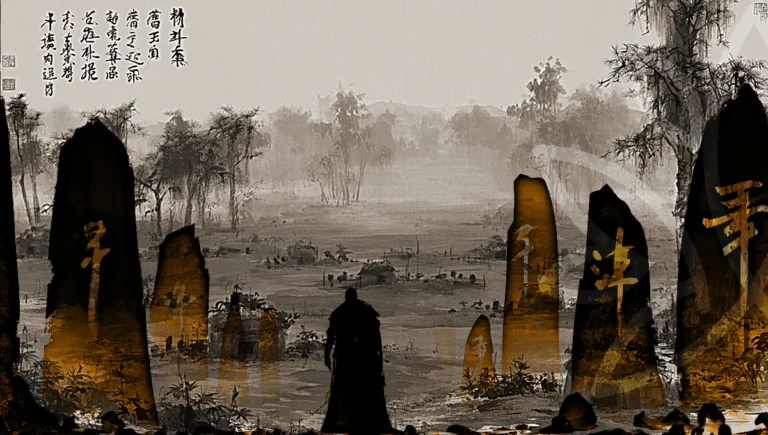
In tomb M90 at Yanghai, in the Turpan Basin of north-western China, archaeologists found 789 g of remarkably preserved cannabis in a leather basket and wooden bowl near the burial platform of a high-status man aged about forty-five.
His grave goods — including bridles, archery equipment and a kongou harp — led researchers to interpret him as a possible shaman. That identity remains an archaeological interpretation rather than a known title.
The plant material was not a random bundle of hemp.
It had been lightly pounded and contained no large stalks or branches. No obvious male flowers were present, leading the researchers to suggest that they had been excluded or possibly removed deliberately.
Chemical and genetic analysis indicated that the original plants were THC-dominant. The ancient material itself contained only very low measurable cannabinoid concentrations after centuries of degradation, so it should not be described simply as cannabis that still had “high THC”.
The evidence points instead towards material selected from plants with higher-than-average psychoactive potential.
This is why the Yanghai find matters.
It does not look like an accidental plant deposit.
It shows selection and preparation.
The quantity appears to have been gathered from several plants. The material was stripped of large stems, lightly pounded and placed deliberately within an elite burial.
Its precise purpose remains uncertain. The researchers proposed medicinal, psychoactive or divinatory use, but the burial cannot tell us which of these meanings was primary.
For LIBERA HERBA, this is one of the clearest ancient traces of deliberate cannabis selection: not modern scandal, but plant knowledge preserved inside a burial.
A plant chosen. A plant prepared.
A plant carried into death.
Factual Note
Tomb M90 at the Yanghai cemetery contained 789 g of dried Cannabis sativa in a leather basket and wooden bowl near the burial platform of a high-status man aged approximately forty-five. The burial is about 2,700 years old and has been associated with the Gūshī culture.
Botanical examination suggested that the cannabis had been cultivated and lightly pounded. The deposit contained no large stalks or branches and no obvious male flowers. Researchers interpreted this as evidence that less psychoactive material had been excluded or possibly removed, although deliberate removal cannot be demonstrated directly.
Phytochemical analysis identified THC degradation products and indicated that THC had been the dominant cannabinoid in the original plants. Genetic analysis also detected sequences associated with THCA synthase. Because the surviving cannabinoid concentrations were very low, the evidence supports a THC-dominant plant population rather than a measurable claim about its original percentage or potency.
The burial context suggests intentional medicinal, psychoactive or divinatory use. No smoking or inhalation apparatus was recovered, so the method of administration remains unknown. The interpretation of the deceased as a shaman is based on his status and grave goods rather than on a written identification.
A living archive of cannabis—its cultivation in practice and its traces across science, culture, language, power and memory.
Join early.
Keep the archive open.
The VADEMECUM is becoming a living archive of guides, tools, notes and practical plant knowledge.
Free member access. Join early. Keep the archive open.
Join early.
Keep the
archive open.
The VADEMECUM is not just a book anymore. It is becoming a living archive of guides, tools, notes and practical plant knowledge.
Free member access. Join early. Keep the archive open.
The VADEMECUM is becoming a living archive of practical plant knowledge.
Free member access.