

Cannabis is an intricate and versatile plant, with each part playing a vital role in its growth, reproduction, and chemical production. Understanding its anatomy is essential for mastering cultivation and maximising yield potential. Below is a detailed breakdown of the plant’s components, their functions, and how they contribute to overall health and productivity.
| Description | The root system anchors the plant in the growing medium, absorbing water and nutrients essential for growth. |
| Function |
|
| Tip | Healthy roots are white or light tan and odourless. Ensure proper drainage and aeration to avoid root rot. |
| Description | The main structural support connecting roots to leaves and flowers. |
| Function |
|
| Tip | Training methods like low-stress training (LST) or topping encourage lateral growth, improving light penetration. |
| Description | Offshoots from the main stem that support leaves and flowers. |
| Function |
|
| Tip | Prune lower branches during late vegetation to focus energy on more productive upper bud sites. |
| TYPES |
|
| Function |
|
| Tip | While fan leaves are essential during vegetation, selective removal during flowering can improve light distribution and airflow. |
| Description | Reproductive structures containing the highest concentration of cannabinoids and terpenes. |
| Function |
|
| Tip | Monitor buds for signs of overwatering, nutrient deficiencies, or pests during development. |
| Description | Tiny, crystal-like structures on flowers and sugar leaves. |
| Function |
|
| Tip | Harvest when trichomes shift from clear to cloudy or amber, depending on the desired cannabinoid profile. |
| Description | Small, tear-shaped structures at the flower base, housing reproductive organs. |
| Function |
|
| Tip | A high calyx-to-leaf ratio indicates superior strain quality. |
| Description | Hair-like structures emerging from the calyx, with stigmas changing colour as the plant matures. |
| Function |
|
| Tip | For sinsemilla (non-seeded buds), remove male plants to prevent fertilisation. |
| Feature | Fan Leaves | Sugar Leaves |
| Location | Throughout the plant | Near buds |
| Size | Large | Small |
| Role | Photosynthesis | Support bud development |
| Cannabinoids | None | Low, with some trichomes coverage |
| Practical Use | Compost or pruning waste | Harvested for concentrates or edibles |
THC is produced in the trichomes, the crystal-like structures on flowers and sugar leaves.
Healthy roots are white or light tan, firm, and odourless.
Fan leaves are large and broad, essential for photosynthesis, while sugar leaves are smaller and trichome-covered, near the buds.
Yellowing leaves often indicate nutrient deficiencies, overwatering, or improper pH levels.
Check trichomes on buds. They should turn from clear to cloudy or amber, depending on your desired effects.
Pistils capture pollen during fertilization and indicate maturity by changing colour as the plant ages.
Selective removal improves light penetration and airflow but avoid over-pruning.
The stem provides structural support and transports water, nutrients, and sugars throughout the plant.
Ensure proper drainage, avoid overwatering, and maintain good aeration around the roots.
Calyxes protect developing seeds and serve as primary resin-producing sites in unfertilised plants.
Yellowing leaves, purple stems, or drooping branches can indicate stress from nutrients, water, or light.
Optimise light intensity, temperature, and humidity during flowering, and ensure adequate phosphorus and potassium levels.
It refers to more calyxes relative to leaves, indicating better-quality buds that are easier to trim.
Pistil colour is an indicator but not definitive. Always check trichomes for accurate harvest timing.
Use precise feeding schedules, maintain ideal environmental conditions, and cure buds properly post-harvest.
Low-stress training encourages lateral growth and improves light distribution without damaging the plant.
Transplant into a larger pot with fresh growing medium to allow roots to expand.
Yes, sugar leaves have lower concentrations than buds but can be used for making concentrates or edibles.
Trichomes act as a natural sunscreen, protecting flowers and sugar leaves from UV damage.
Indicas have broader leaves and shorter structures, while sativas have narrow leaves and taller, lankier growth.
Νοταε
Topics
cannabis, plant, roots, stems, leaves, buds, trichomes, cola
Focus Keyword
cannabis plant anatomy
Description
From root tips to trichomes — explore every structure of the cannabis plant and understand what each part does. Essential knowledge for anyone who wants to grow with intention, not guesswork.
A living archive of cannabis—its cultivation in practice and its traces across science, culture, language, power and memory.
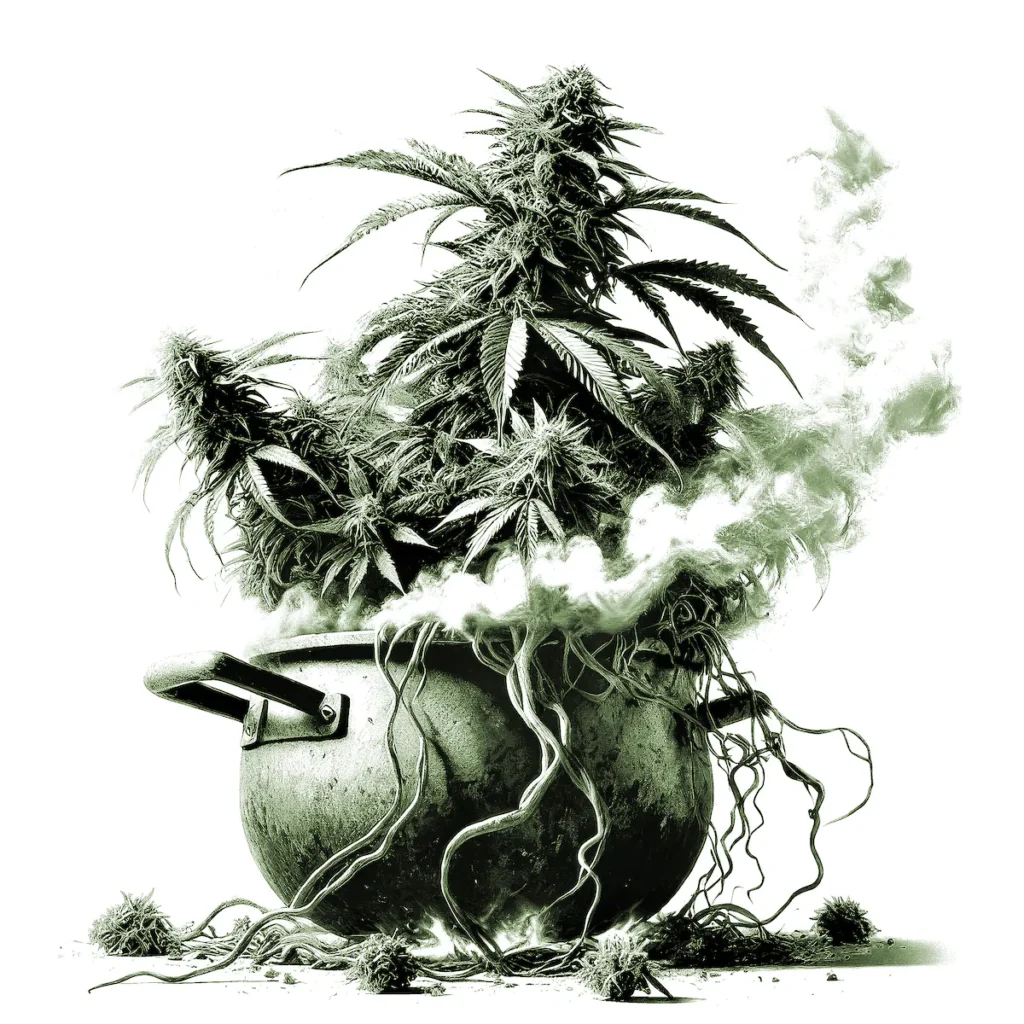
Join early.
Keep the archive open.
The VADEMECUM is becoming a living archive of guides, tools, notes and practical plant knowledge.
Free member access. Join early. Keep the archive open.
Join early.
Keep the
archive open.
The VADEMECUM is not just a book anymore. It is becoming a living archive of guides, tools, notes and practical plant knowledge.
Free member access. Join early. Keep the archive open.
The VADEMECUM is becoming a living archive of practical plant knowledge.
Free member access.