
HERBARIUM
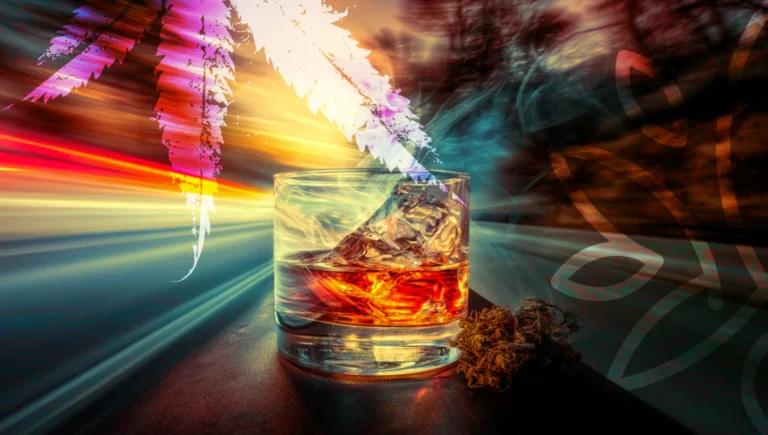
Cannabis needs adult language.
Adult language means saying this clearly:
Some combinations do not simply add risk.
They multiply uncertainty.
The point is not to shame use. The point is to separate use from preventable harm. There are moments where the right cannabis education is two words:
Just don’t.
The equation
is not 1 + 1
The common mistake is arithmetic.
That is not how the body works.
Alcohol and cannabis can amplify each other’s impairment. NHTSA states that using two or more drugs at the same time, including alcohol, can amplify the impairing effects of each substance.
A review of alcohol and cannabis co-use found that co-use is associated with additive impairment effects and higher risk outcomes than using either alone.
There is also evidence that alcohol can increase blood THC levels. A 2015 report on a Clinical Chemistry study notes that simultaneous alcohol and cannabis use produced significantly higher blood concentrations of THC and 11-hydroxy-THC than cannabis alone.
So the better sentence is:
Alcohol does not simply sit next to cannabis.
It can change the cannabis experience.
This is where the “greenout” lives: dizziness, nausea, sweating, panic, vomiting, loss of balance, sudden weakness, blood-pressure drop, confusion, or the classic collapse of the confident person into the bathroom floor.
That is not Spartan endurance.
That is pharmacology plus bad judgement.
Rule:
If cannabis is involved, treat alcohol as a multiplier, not a garnish.
Better lesson:
The body does not care how tough you sound.
Slow and careful
is not the same as safe.
The classic sentence:
“I drive better when I’m high. I go slower”.
No.
You may drive slower.
That does not mean you drive safely.
Driving is not only speed. It is reaction time, divided attention, lane position, distance judgement, hazard detection, peripheral awareness, decision-making and the ability to respond to the unexpected.
NHTSA states that marijuana can impair driving because it slows coordination, judgement and reaction time.
A major review found that cannabis and alcohol acutely impair several driving-related skills in a dose-related way, and that cannabis effects vary between individuals. (pmc.ncbi.nlm.nih.gov)
And the mathematics is unforgiving.
At 100 km/h, a car travels about 27.8 metres every second.
If reaction time is delayed by only half a second, the car travels almost 14 extra metres before the driver even begins to respond. If the delay is one second, that is almost 28 extra metres.
That can be the width of the mistake between:
The most dangerous part is that the driver may feel careful. Cannabis can make a person more aware of one part of the task while worse at the whole task. That is not skill. That is narrowed confidence.
Rule:
Do not drive after cannabis. Do not drive after cannabis plus alcohol.
Do not get in the car with someone who has used.
Better lesson:
Feeling careful is not a driving test.
The stupidest
triangle
Cannabis alone can impair. Alcohol alone can impair. Together, they become one of the most predictable ways to turn bad judgement into metal, glass and regret.
A driving study found that the combination of alcohol and THC had the most intense effect, with performance impairments in driving and non-driving tasks as well as subjective and physiological effects.
The cruel part is that people under the influence may still be willing to drive. Impairment does not always reduce confidence. Sometimes it only reduces ability.
Rule:
If alcohol and cannabis are both present,
the driving decision is already over.
Better lesson:
The safest impaired-driving plan
is the one made before impairment.
The delayed
trap.
Edibles deserve their own warning.
They do not arrive on your schedule.
Inhaled cannabis has a faster onset. Edibles can take much longer to peak, and the effects can last much longer. The classic disaster is impatience:
Edibles are also harder to titrate because dose, stomach contents, metabolism and product accuracy vary. Combining edibles with alcohol is especially risky because both timing and impairment become harder to read.
Rule:
Do not re-dose because your impatience is louder than the edible.
Better lesson:
Delayed onset is not failed onset.
Tools, ladders, machines,
electricity.
Do not use cannabis before tasks that require coordination, judgement, balance or emergency response.
Cannabis culture often focuses on cars and forgets work.
Work can kill too.
Rule:
If the task can injure you sober,
do not do it impaired.
Better lesson:
A tool does not become safer
because the user feels relaxed.
LIBERA HERBA position
LIBERA HERBA does not confuse confidence with control. Cannabis, alcohol, delayed edibles, driving and hazardous work belong in the same safety conversation because impairment is not always recognised by the impaired person.
The responsible decision is made before the journey, the second dose or the dangerous task begins.
Factual Note
Cannabis can impair driving-related skills, including coordination, judgement and reaction time. Alcohol can add to impairment, and combined use can make effects harder to predict. Edibles have delayed and variable onset, which increases the risk of premature re-dosing. Driving or operating hazardous equipment while impaired should be avoided.
A living archive of cannabis—its cultivation in practice and its traces across science, culture, language, power and memory.
Join early.
Keep the archive open.
The VADEMECUM is becoming a living archive of guides, tools, notes and practical plant knowledge.
Free member access. Join early. Keep the archive open.
Join early.
Keep the
archive open.
The VADEMECUM is not just a book anymore. It is becoming a living archive of guides, tools, notes and practical plant knowledge.
Free member access. Join early. Keep the archive open.
The VADEMECUM is becoming a living archive of practical plant knowledge.
Free member access.