
—orig. developed through MOICANNA
– originally developed through MOICANNA
HEBRARIUM

Cannabis history is full of confident people.
The confidence is often the dangerous part.
Again and again, cannabis exposes a pattern: people begin with a theory, spend money to prove it, ignore the plant, ignore the market, ignore the science, ignore the human reality — and then call the failure surprising.
The plant did not fail. The theory failed.
The intelligence dream was simple:
Find a chemical
that makes people tell the truth.
That dream was older than the CIA, but the Cold War gave it budget, secrecy and institutional obsession. MKUltra began in 1953 and was halted in 1973. It involved illegal and unethical human experimentation, including covert administration of psychoactive drugs, especially LSD, and other methods intended to alter behaviour, memory, resistance and mental state.
This was not science at its best.
It was power trying to buy certainty.
The truth-serum fantasy failed because truth is not a tap. A drug can confuse, terrify, sedate, disinhibit, distort memory, produce compliance, produce fantasy or break a person. That is not the same as reliable truth.
Cannabis and THC derivatives appear in the wider history of interrogation-drug experiments, but we should not overstate them without direct documentation. The stronger lesson is broader: intelligence agencies repeatedly mistook altered states for controlled truth.
The expensive assumption:
If consciousness can be chemically altered,
truth can be chemically extracted.
The failure:
Altered consciousness is not reliable evidence.
The better lesson:
A confession produced by coercion or intoxication
may reveal more about the interrogator than the subject.
This one is not a clean cannabis story.
That matters.
Trofim Lysenko was a Soviet agronomist who rejected Mendelian genetics and promoted politically favoured pseudoscientific ideas. His rise damaged Soviet biology, helped suppress geneticists, and became a classic warning about what happens when ideology is placed above evidence.
But the specific claim that Lysenko ran a massive failed hemp programme in Siberia that destroyed Soviet cannabis production is not solid enough to publish as fact.
So why keep him?
Because he belongs as a mirror.
Cannabis people are not immune to Lysenkoism. Any culture can become Lysenkoist when it decides what must be true before testing what is true.
Lysenko is the warning label:
When evidence is forced to serve ideology,
crops eventually answer back.
The expensive assumption:
Nature will obey political theory.
The failure:
Nature does not read party doctrine.
The better lesson:
Do not make cannabis education
another ideology with better packaging.
Here the absurdity becomes almost comic.
The United States spent decades funding cannabis eradication efforts, including the DEA’s Domestic Cannabis Eradication/Suppression Program. The programme began in the early 1980s and by fiscal year 1994 all 50 states were involved.
The official logic was enforcement.
The practical problem was botany.
Much of what law enforcement counted and destroyed in some regions was not high-THC cultivated cannabis but feral hemp, often called ditchweed — descendants of industrial hemp grown in earlier agricultural programmes. Critics argued that large sums were spent eradicating low-THC plants with little or no psychoactive value.
The GAO later reported that from 2015 through 2018, DEA obligated over $17 million annually on average to the eradication programme, with participating agencies spending much of the money on aviation support and overtime.
This is the perfect policy failure: aircraft, overtime, maps, raids, headlines — and sometimes the enemy was a plant nobody could get high from.
The state fought the symbol.
The plant kept returning.
The expensive assumption:
If we eradicate enough plants, we defeat the problem.
The failure:
The programme often confused plant count with meaningful harm reduction.
The better lesson:
A policy that cannot distinguish hemp from threat
will spend money fighting botany.
Legalisation was supposed to make the arithmetic easy.
Canada showed the correction.
After national legalisation in 2018, many companies built large production capacity ahead of stable demand, retail infrastructure, consumer loyalty and price reality. Oversupply, price compression, inventory problems, black-market competition and profitability pressures followed.
The numbers are brutal. In 2021, Canada’s federally licensed producers destroyed 425 million grams of unsold, unpackaged dried cannabis. From 2018 through the first half of 2023, Canadian operators destroyed 3.7 million pounds of unsold, unpackaged cannabis.
Aurora Cannabis paused operations at its massive Aurora Sun greenhouse indefinitely in 2020. Reuters later reported Aurora shutting an Edmonton facility as part of restructuring, noting that Canadian cannabis companies struggled with profitability due to fewer retail outlets than expected, black-market competition and slow international expansion.
This was not only a cannabis problem.
It was a business fantasy problem.
Investors treated a plant like a spreadsheet with lights. Companies scaled before demand, quality systems, distribution, brand trust and pricing reality were mature. The market responded like markets do: by refusing to honour optimism.
The expensive assumption:
Legal cannabis demand will absorb industrial-scale production.
The failure:
Supply grew faster than trust, distribution and profitable demand.
The better lesson:
Legalisation opens the door.
Arithmetic decides who stays inside.
This one stays anonymous.
A military unit is sent to clear an illegal cannabis patch. The job is simple: remove the plants.
The result is less simple.
Soldiers return with sleeves, pockets and private logistics suspiciously fuller than before. Whispers spread. Command realises that a full crackdown would expose the scale of the embarrassment. So the solution becomes bureaucratic genius:
No soldier who goes once is allowed to go again.
This is not policy.
It is comedy wearing boots.
And yet it teaches something real.
Eradication is never just plant removal. It is human behaviour, temptation, enforcement credibility, institutional embarrassment and the awkward fact that the people assigned to destroy a forbidden object may also be curious about it.
The expensive assumption:
Send bodies to remove the problem.
The failure:
The bodies had pockets.
The better lesson:
Any policy that ignores human nature
becomes theatre.
These failures are different.
But the structure is the same.
This is why cannabis education needs failure stories.
Success stories flatter. Failure stories teach.
| Claim | The CIA proved cannabis useless because subjects just laughed and got hungry. |
| Verdict | Funny, but not publishable as fact. |
| Better lesson | MKUltra and related programmes show the failure and abuse of truth-serum fantasies; use cannabis-specific claims only with direct documentation. |
| Claim | Lysenko destroyed Soviet hemp production through Siberian cannabis experiments. |
| Verdict | Not established. |
| Better lesson | Lysenko is a powerful parallel about bad science and ideology, but not a verified cannabis case here. |
| Claim | The DEA spent huge resources eradicating low-THC ditchweed. |
| Verdict | Enters. |
| Better lesson | The eradication programme became a symbol of policy absurdity when plant counts included feral low-THC hemp. |
| Claim | Canadian cannabis failed because corporations cannot grow good weed. |
| Verdict | Too simple. |
| Better lesson | Oversupply, retail bottlenecks, black-market competition, pricing, quality, inventory and inflated expectations all mattered. |
| Claim | The barracks story proves soldiers are impossible. |
| Verdict | Anecdote, not evidence. |
| Better lesson | Enforcement policy must account for human behaviour, not imaginary discipline. |
Factual Note
At the Jirzankal Cemetery in the eastern Pamirs, dated around 500 BCE, researchers found cannabinoid residues in wooden braziers and on burned stones.
The evidence indicates that cannabis plants were burned during mortuary ceremonies, making this one of the earliest directly dated and scientifically verified examples of ritual cannabis smoking.
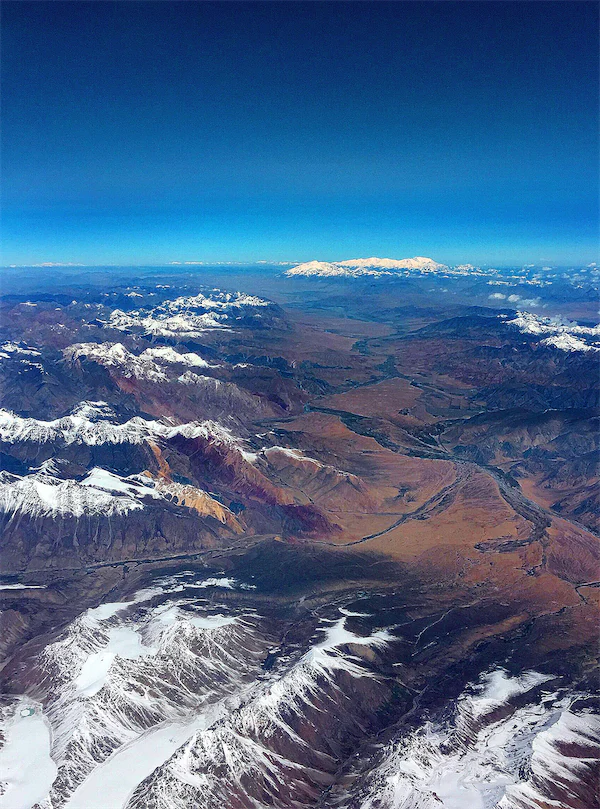 Jirzankal Cemetery
Eastern Pamirs, western China
c. 500 BCE
A high-altitude burial site where wooden braziers and heated stones preserved chemical evidence of burned cannabis.
The context suggests ritual or religious use during funerary ceremonies.
Join early.
Keep the archive open.
The VADEMECUM is becoming a living archive of guides, tools, notes and practical plant knowledge.
Free member access. Join early. Keep the archive open.
Join early.
Keep the
archive open.
The VADEMECUM is not just a book anymore. It is becoming a living archive of guides, tools, notes and practical plant knowledge.
Free member access. Join early. Keep the archive open.
The VADEMECUM is becoming a living archive of practical plant knowledge.
Free member access.