
HERBARIUM
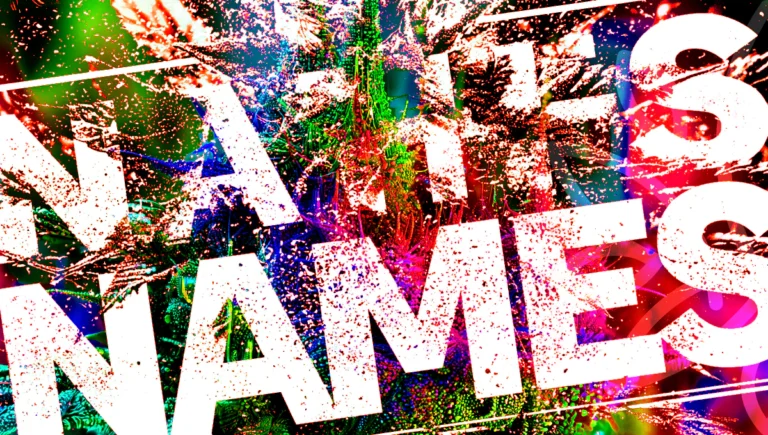
A word can have mixed origins
and still become a vehicle of stigma.
A plant can change identity without changing biology.
The plant is one. The names are not.
This is why language matters.
Cannabis has never been only a plant in the ground. It has also been a plant in the mouth: named, renamed, translated, classified, feared, mocked, medicalised, criminalised and sold.
Each word carries a different archive.
A word can have mixed origins
and still become a vehicle of stigma.
In botanical language, Cannabis sativa belongs to the scientific attempt to classify the living world. Linnaeus described the plant in Species Plantarum in 1753. The word sativa points towards cultivation — a plant known through sowing, tending and use. This is not folklore. It is taxonomy remembering agriculture.
In older European use, hemp carried the industrial memory of the plant. Hemp was not scandal. Hemp was work. It was rope, fibre, sailcloth, sacks, paper, textile, cordage and field labour. The word belonged to utility before it belonged to controversy.
Then comes the more difficult word: marijuana. Its origin is not completely settled. It is usually traced through Mexican Spanish forms such as marihuana or mariguana, but the exact etymology remains uncertain. That uncertainty matters.
LIBERA HERBA should not pretend the word was invented by prohibitionists. It was not.
But prohibition did not need to invent the word in order to use it.
In the United States, the word marihuana / marijuana became politically powerful in the early 20th century, precisely because it sounded different from the familiar agricultural and medical vocabulary of hemp and cannabis. It helped separate the feared smoked drug from the useful fibre crop and the known medicinal plant.
That separation was not neutral.
The history of cannabis prohibition in the United States is tied to anxieties around Mexican migrants, Black communities, jazz culture, urban vice, poverty and policing. Scholars still debate how much weight to give each factor, but the language of “marijuana menace” clearly helped build a public image of the plant as foreign, dangerous and socially contaminating.
This is where LIBERA HERBA must be careful.
It is too simple to say: “Marijuana is a racist word”.
It is also too simple to say: “Words do not matter”.
Both miss the deeper point.
A word can have mixed origins and still become a vehicle of stigma.
A word can be used lovingly by one community and violently by another.
A word can belong to culture, law, music and policing at the same time.
That is why the question is not only etymology.
The question is framing.
When modern scientific and public-health reports choose cannabis instead of marijuana, they are not inventing a new polite word. They are often returning to a broader and more accurate one. The National Academies, for example, uses “cannabis” as the all-encompassing term for products derived from Cannabis sativa, including marijuana and hemp, and explicitly prefers it over “marijuana” in its policy work.
This does not mean every historical use of “marijuana” should be erased.
In an archive, the old word must remain visible.
In law, it often remains embedded.
In music and counterculture, it may carry memory.
In communities affected by prohibition, it may be reclaimed, resisted or rejected.
LIBERA HERBA does not need to police every word.
It needs to explain what each word carries.
A name can organise memory
before it describes biology.
It can make the same plant sound industrial, medicinal, criminal, sacred, casual or foreign.
The word does not change the species.
It changes the frame around it.
Hemp was not scandal.
Hemp was work.
Before cannabis became a modern controversy, hemp was a working word. It belonged to rope, sailcloth, sacks, cordage, paper, oil, seed, fibre and field labour. It was the name of a plant understood through usefulness.
This is why “hemp” matters to LIBERA HERBA.
It reminds us that the plant was not always introduced through fear.
Sometimes it entered the record through work.
Cannabis is not a rebrand.
It is a return to the plant.
“Cannabis” gives the plant back its full frame. It is broad enough to hold medicine, fibre, intoxication, seed, resin, cultivation, law and science without collapsing everything into one cultural image.
That is why modern scientific and policy language often prefers it.
Not because it is softer. Because it is more accurate.
A word can have mixed origins
and still become a vehicle of stigma.
“Marijuana” should not be handled lazily. It was not invented from nothing by prohibition. Its linguistic roots are older and uncertain.
But in the 20th-century United States, the word became attached to fear, policing, racialised anxieties and the public construction of the “marijuana menace”.
That history cannot be ignored.
Nor should it be simplified.
Some names carry law.
Others carry song.
“Ganja” carries a different archive. It points towards India, Caribbean movement, Rastafari, reggae, cultivation, devotion and resistance. It is not simply slang. It is a word shaped by migration and cultural memory.
For LIBERA HERBA, “ganja” belongs where
the plant is not only consumed,
but sung, prayed, farmed, defended and lived.
Hashish is not only resin.
It is also an archive of imagination.
“Hashish” is one of the oldest cultural names attached to cannabis resin. It carries medicine, trade, intoxication, literature, orientalism, colonial fantasy and prohibition-era fear. The word has often been used to make the plant seem exotic, dangerous or decadent.
That makes it useful — but dangerous.
It should be read historically, not romantically.
“Weed” is blunt
and democratic.
It makes the plant ordinary: grass, herb, green stuff, something that grows, something hard to erase. It can be affectionate, dismissive, rebellious or casual depending on the mouth that says it.
“Weed” also carries a botanical joke. A weed is not a biological category. It is a plant growing where someone does not want it.
That makes the word perfect for cannabis.
A weed is a plant
in conflict with human intention.
“Pot” looks simple
and comic.
Its origin is not fully secure. A common explanation traces it to Spanish potiguaya or potación de guaya, sometimes described as a cannabis-infused drink, but this should be treated cautiously rather than as settled fact. The word became common in English-language cannabis slang in the twentieth century.
What matters culturally is not only where “pot” came from.
It is what it became.
“Pot” domesticates the forbidden thing.
It makes contraband sound like a kitchen word.
“Reefer” is a perfect
slang trap.
Some explain it from Mexican Spanish grifo, meaning marijuana or a person under its influence. Others connect it to reef, as in rolling or folding a sail, perhaps by analogy with a rolled cigarette. The etymology is uncertain.
That uncertainty is the point.
Reefer belongs to the world where cannabis language moved through sailors, jazz, policing, race, nightlife and moral panic. Its most famous afterlife is not botanical at all. It is cinematic fear: Reefer Madness.
A word becomes a warning sign.
“Herb” is gentle but
not innocent.
In Rastafari and wider Caribbean usage, “herb” can carry spiritual and natural meaning. It pushes back against the criminal word by returning the plant to creation, earth, healing, ritual and identity.
But like all strong words,
it can also become costume when outsiders use it lazily.
It works only when respect is real.
Má is not only a name.
It is a record of use.
In Chinese, má 麻 is one of the great names of the plant.
It is associated with hemp/cannabis across ancient Chinese material culture: fibre, textiles, food and medicine. Ancient texts and scholarship describe hemp’s prominence in early China, including references in classical literature and medical traditions.
Má is important because it reminds us
that the plant was not only smoked, banned or branded.
It was woven.
It clothed bodies, entered medicines, fed people through seed,
and belonged to a civilisation’s practical vocabulary.
Bhang names a preparation,
not simply the plant.
Bhang belongs to the South Asian vocabulary of cannabis preparations.
It is not just another synonym. It refers especially to preparations made from cannabis leaves and sometimes flowers, often associated with drink, festival, medicine and religious-cultural contexts in India.
This is where language becomes preparation.
The word does not only name the plant.
It names a way of using it.
Cannabis has hundreds, probably thousands, of slang names.
That is what happens when pleasure, law, class, race, humour, trade and secrecy collide. TIME’s discussion of cannabis slang notes that terms multiply because older names become known to authorities or the public, and new terms arise from secrecy, affection, jokes, effects, plant appearance and culture.
Slang is not just decoration.
It is survival language.
Every name is a strategy.
Same plant family.
Different worlds.
The plant family remains related.
The social worlds do not.
A name is not only what we call the plant.
It is how we ask permission to think about it.
| Claim | “Kan-Bha” is the ancient Sumerian root of cannabis meaning “ray of light” or “reed of production”. |
| Verdict | Cut unless a serious philological source appears. |
| Better lesson | Use attested forms such as Greek kannabis and Akkadian/Neo-Assyrian qunabu with caution. |
| Claim | “Ganja” comes from the Ganges. |
| Verdict | Not safe as fact. |
| Better lesson | Ganja travels through Indo-Aryan languages and later Caribbean/Rastafari history. |
| Claim | “Marijuana” was invented by American propagandists. |
| Verdict | Too simple. |
| Better lesson | The word existed in Mexican Spanish; US prohibition politics made it useful as a foreign-sounding fear word. |
| Claim | “Pot” definitely comes from potación de guaya. |
| Verdict | Possible, but not fully settled. |
| Better lesson | Treat it as a common theory, not a certainty. |
| Claim | “Reefer” definitely comes from sailors reefing hemp sails. |
| Verdict | Uncertain. |
| Better lesson | There are competing explanations, including Mexican Spanish grifo and the rolled-sail analogy. |
| Claim | Slang is unserious. |
| Verdict | False. |
| Better lesson | Slang records law, secrecy, affection, fear and culture. |
Factual Note
Cannabis language is historically layered. Cannabis sativa was described by Linnaeus in 1753, and sativa points to cultivation. Hemp generally refers to the fibre/industrial identity of the plant. Marijuana / marihuana likely entered English through Mexican Spanish forms, though its precise etymology remains uncertain. The term was not invented by prohibitionists, but it became heavily associated with 20th-century prohibition campaigns, racialised fear, policing and stigma. Contemporary scientific and policy writing often prefers cannabis as the broader and more precise term.
A living archive of cannabis—its cultivation in practice and its traces across science, culture, language, power and memory.
Join early.
Keep the archive open.
The VADEMECUM is becoming a living archive of guides, tools, notes and practical plant knowledge.
Free member access. Join early. Keep the archive open.
Join early.
Keep the
archive open.
The VADEMECUM is not just a book anymore. It is becoming a living archive of guides, tools, notes and practical plant knowledge.
Free member access. Join early. Keep the archive open.
The VADEMECUM is becoming a living archive of practical plant knowledge.
Free member access.