
—orig. developed through MOICANNA
– originally developed through MOICANNA
HEBRARIUM
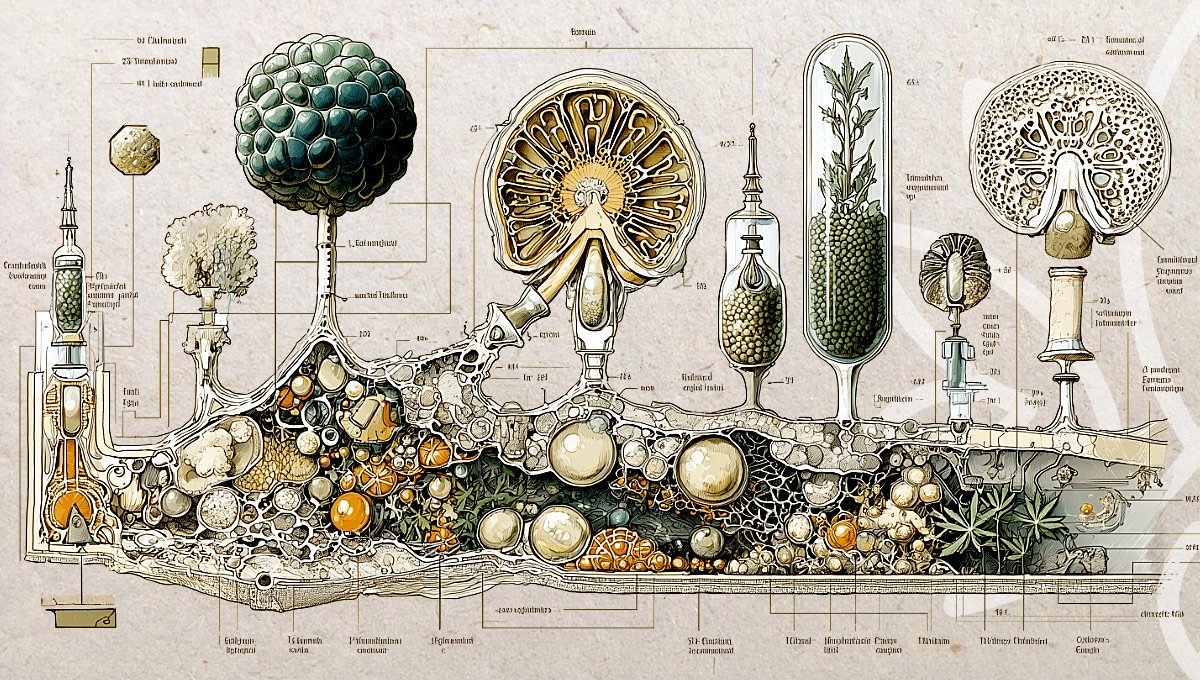
The plant did not create the lock.
The lock was already there.
In the late 20th century, cannabis research helped reveal one of the body’s own signalling networks: the endocannabinoid system. CB1 receptors, especially abundant in the central nervous system, CB2 receptors associated largely with immune signalling, and endogenous molecules such as anandamide and 2-AG showed that cannabinoid signalling already belonged to the body.
This is where cannabis becomes scientifically strange and culturally powerful.
The plant did not invent the system.
But it carried molecules able to touch it.
For LIBERA HERBA, this is one of the deepest scientific traces of the plant: not a miracle claim or mysticism, but a biological encounter between plant compounds and a signalling language already present in the body.
The key was not made for cannabis.
But cannabis helped us notice the key.
Factual Note
Research into cannabis helped identify cannabinoid receptors and the wider endocannabinoid system. CB1 receptors are especially important in the central nervous system, while CB2 receptors are associated largely with immune and inflammatory signalling.
The body also produces its own cannabinoid-like signalling molecules, including anandamide and 2-AG. Cannabis did not create this system; its compounds helped researchers discover and study it.
The lock-and-key metaphor is useful, but simplified. Cannabinoids interact with a complex network of receptors, enzymes and signalling pathways rather than a single biological lock.
Join early.
Keep the archive open.
The VADEMECUM is becoming a living archive of guides, tools, notes and practical plant knowledge.
Free member access. Join early. Keep the archive open.
Join early.
Keep the
archive open.
The VADEMECUM is not just a book anymore. It is becoming a living archive of guides, tools, notes and practical plant knowledge.
Free member access. Join early. Keep the archive open.
The VADEMECUM is becoming a living archive of practical plant knowledge.
Free member access.