
—orig. developed through MOICANNA
– originally developed through MOICANNA
HEBRARIUM
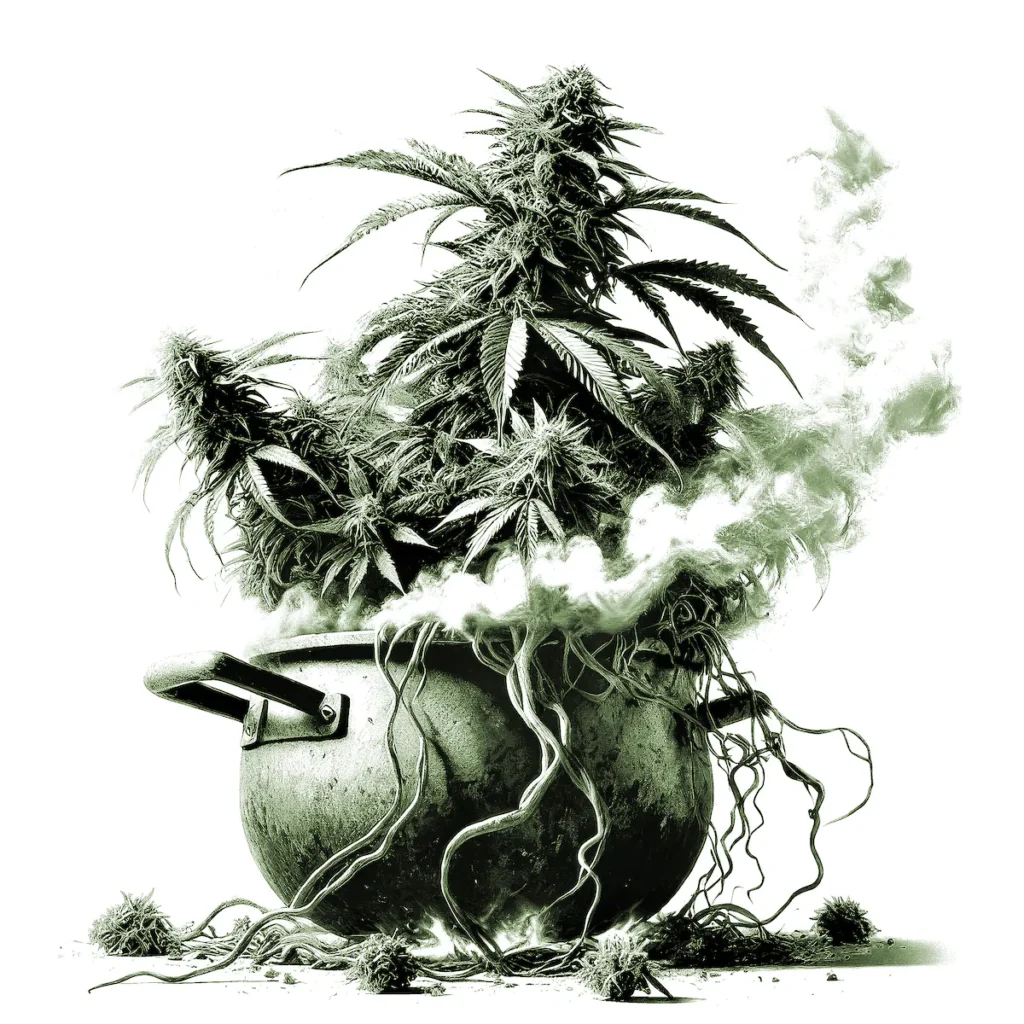
Nepenthés Cannabis (Κάνναβις η νηπενθής)
Before it became fibre, it was a bond.
Before it became smoke, it was a whisper.
Before it became forbidden, it was nepenthes:
an herb without grief.
The Greek word nepenthés is one of those rare words that feels older than language itself. It does not simply name a plant, a medicine, or a myth. It names a human need: the wish for something that can soften sorrow without erasing the soul.
In Homer’s Odyssey, nepenthes appears as a pharmakon — a substance placed into wine by Helen, capable of easing grief and quieting pain. The exact identity of this substance is not certain. Many have associated it with opium, Egyptian preparations, or a literary medicine of forgetfulness. Some have also tried to connect it with cannabis, though that identification is far from proven.
But for LIBERA HERBA, the importance is not to force the ancient word into a modern botanical claim.
The importance is this:
nepenthés means what therapeutic cannabis has come to mean for many people — not intoxication, not escape, but relief.
A lessening of burden. A softening of pain. A space where the body can breathe again. A plant returning from stigma to care.
Before it became fibre, it was a bond.
Before it became smoke, it was a whisper.
Before it became forbidden, it was nepenthes:
an herb without grief.
The Greek word nepenthés is one of those rare words that feels older than language itself. It does not simply name a plant, a medicine, or a myth. It names a human need: the wish for something that can soften sorrow without erasing the soul.
In Homer’s Odyssey, nepenthes appears as a phármakon mixed into wine by Helen, associated with the easing of grief. Its exact identity is uncertain. It has been linked to opium, Egyptian preparations and literary medicine, while attempts to identify it specifically as cannabis remain unproven.
But for LIBERA HERBA, the importance is not to force the ancient word into a modern botanical claim.
The importance is this:
nepenthés means what therapeutic cannabis has come to mean for many people — not intoxication, not escape, but relief.
The ancient nepenthés cannot be identified confidently as cannabis. Opium and other ancient preparations have also been proposed, but no single identification is secure.
And yet the word fits. It fits because cannabis, in its therapeutic sense, is not only a plant of chemistry. It is also a plant of cultural memory. It has been rope, cloth, seed, oil, medicine, ritual, stigma, rebellion and recovery. It has passed through law, fear, commerce and healing.
It has carried too many meanings to be reduced to one.
To call it nepenthés cannabis is not to rewrite Homer. It is to recover a word.
A word for the medicinal dignity of relief.
Nepenthés is often translated as:
That is why the word matters.
It does not describe pleasure alone.
It does not describe oblivion alone.
It describes the removal of grief’s sharp edge.
In that sense, nepenthés is not only a mythological drug. It is an idea: that nature may hold substances capable of changing the human relationship with pain, memory and suffering.
This is where the word resonates with modern therapeutic cannabis: not as proof of ancient identity, but as a language of relief, measured use and care.
There is another beautiful turn in the story.
Nepenthes later became the botanical name of a genus of carnivorous pitcher plants. The name was given to tropical pitcher plants, whose strange beauty seemed worthy of the ancient word. Today, Nepenthés belongs both to Homeric imagination and to botanical taxonomy.
A word for sorrow’s relief became the name of a plant.
That is almost too perfect.
Because plants often carry meanings long before science names them.
Nepenthés carries three different histories.
These meanings may speak to one another.
They should not be collapsed into one claim.
Because plants often carry meanings
long before science names them.
Factual Note
Nepenthés appears in Homer’s Odyssey as a grief-easing pharmakon, but its identity is uncertain. Cannabis is one of several later proposals and should not be presented as an established identification. Nepenthes is also the botanical name of a genus of carnivorous pitcher plants.
Join early.
Keep the archive open.
The VADEMECUM is becoming a living archive of guides, tools, notes and practical plant knowledge.
Free member access. Join early. Keep the archive open.
Join early.
Keep the
archive open.
The VADEMECUM is not just a book anymore. It is becoming a living archive of guides, tools, notes and practical plant knowledge.
Free member access. Join early. Keep the archive open.
The VADEMECUM is becoming a living archive of practical plant knowledge.
Free member access.