
—orig. developed through MOICANNA
– originally developed through MOICANNA
HEBRARIUM

The most common mistake
in choosing cannabis genetics is vanity.
But cultivation does not reward fantasy.
A variety is not “good” in the abstract. It is good for a place, a system, a grower, a climate, a purpose and a level of skill.
The best plant in the wrong environment
becomes a problem.
The modest plant in the right environment can
become excellent.
That is the first rule:
The best variety is not the one with the biggest reputation.
It is the one you can grow well.
A grower should begin with climate,
not catalogue photos.
Outdoors, climate is law.
A long-flowering tropical cultivar may be beautiful, but if it needs 12–14 weeks of flower and autumn brings rain, mould and cold nights, the grower has not chosen a plant. He has chosen a future disappointment.
A dense, resinous flower may win indoors and rot outdoors near the sea.
A compact fast indica-type plant may survive a short season but suffer in extreme humidity.
A drought-tolerant line may outperform a fashionable cultivar in a dry Mediterranean place, even if the fashionable cultivar looks better online.
Climate does not care what won a cup.
Indoor growers
often think they escaped climate.
They did not. They replaced natural climate with a machine.
The question becomes:
Can the room actually hold the climate this variety needs?
Some genetics stretch aggressively. Some stay compact. Some tolerate high light. Some bleach easily. Some drink heavily. Some hate root-zone instability. Some tolerate pruning. Some dislike training. Some produce dense flowers that demand serious humidity control. Some smell violently. Some require long flowering and patience. Some punish missed drybacks.
Indoor cultivation lets the grower control more variables, but it also makes the grower responsible for every variable.
Indoor does not remove environment.
It makes the grower the environment.
Location is not just geography.
It is infrastructure.
A plant grown in the wrong place becomes expensive
before it becomes impressive.
This is where the cold-climate question belongs.
Some controlled-environment growers choose colder regions because cooling indoor or greenhouse cannabis can be expensive. In a cold climate, outside air or ambient conditions may reduce mechanical cooling demand during parts of the year.
That is not “Arctic magic”.
It is climate used as equipment.
The grower is not growing Arctic cannabis. The grower is using climate as infrastructure.
But free cooling is never truly free.
It only moves the bill.
A cold site may save on cooling, but pay more for heating, supplemental lighting, insulation, snow load, humidity control, construction standards, logistics and winter energy peaks.
A hot site may save on heating, but pay for cooling, water scarcity, high VPD, pests, salinity and drought stress.
So the question is not:
Where is cannabis easiest?
The question is:
Which climate cost can this system afford,
and which one will break it?
Genetics should be chosen
with water in mind.
A water-hungry, fast-growing, high-input cultivar may be inappropriate where water is expensive, scarce, alkaline, salty or politically sensitive.
A drought-tolerant, early-finishing, resilient cultivar may be less glamorous but more ethical and more successful.
Water is not only irrigation.
A cultivar that demands constant rescue feeding, flushing and heavy irrigation is not “elite” in a water-stressed world.
It is expensive.
The right genetics should fit the water,
not only the market.
Some plants are beautiful
until the weather turns humid.
Then the dense flower becomes a sponge.
This is the grower’s uncomfortable lesson:
Beauty is not always resilience.
Some genetics are forgiving.
Some are not.
A beginner should not choose the most unstable, slow, sensitive, nutrient-demanding, stretch-heavy, mould-prone cultivar because it has a legendary name.
That is not ambition.
That is ego wearing a seed pack.
The honest questions are:
The plant may be excellent.
The grower may not yet be ready for it.
Choose genetics that match your competence,
not your fantasy identity.
For a professional, “right genetics”
includes economics.
Yield matters.
But not alone: cycle time, lab results, consistency, resistance, trim cost, drying behaviour, bag appeal, terpene stability, consumer demand, medical specification, extract suitability, legal category, testing risk, batch repeatability…
So:
A professional does not choose the plant.
A professional chooses the plant-system-market fit.
Landraces carry adaptation, history,
genetic diversity and cultural memory.
They may contain traits modern breeding needs: drought tolerance, pest resistance, unusual terpene profiles, architecture, flowering behaviour, fibre traits or resilience.
But “landrace” is also one of the most abused words in cannabis marketing.
A landrace from one ecological context may suffer badly in another. The right way to honour landraces is not to romanticise them.
It is to document, preserve, test and respect
the communities and landscapes that shaped them.
The lazy question:
What is the best strain?
The better questions:
A serious answer begins only after the word “best” is forced to explain itself.
Best is not a cultivar. Best is a context.
Do not choose genetics
because they are famous.
Choose genetics because they fit the truth of the grow.
The plant does not grow inside the catalogue.
It grows inside reality.
| Claim | The best strain is the one with the most awards. |
| Verdict | False. |
| Better lesson | Awards do not prove suitability for your climate, room, water, skill or purpose. |
| Claim | Indoor growing means genetics can be chosen freely. |
| Verdict | False. |
| Better lesson | Indoor growing shifts environmental responsibility to equipment and grower competence. |
| Claim | Cold regions make climate control free. |
| Verdict | False. |
| Better lesson | Cold climates may reduce cooling demand but increase heating, lighting and infrastructure burdens. |
| Claim | Landrace means superior. |
| Verdict | Romantic overreach. |
| Better lesson | Landraces may hold valuable traits, but usefulness depends on context, documentation and preservation ethics. |
| Claim | High yield is the best professional trait. |
| Verdict | Too simple. |
| Better lesson | Professional suitability includes consistency, disease resistance, post-harvest behaviour, market fit and risk. |
| Claim | One cultivar can be best for everyone. |
| Verdict | Impossible. |
| Better lesson | The right plant is always a relationship between genetics and conditions. |
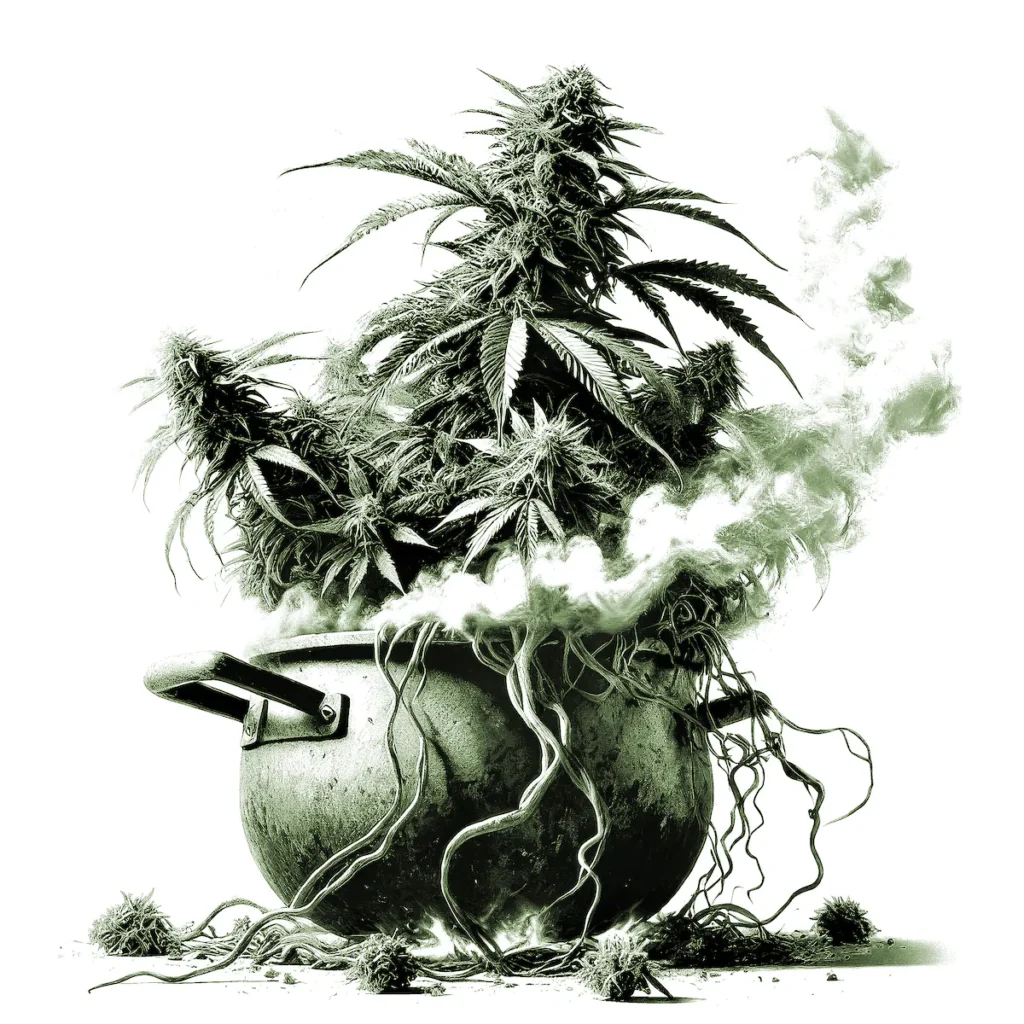
Join early.
Keep the archive open.
The VADEMECUM is becoming a living archive of guides, tools, notes and practical plant knowledge.
Free member access. Join early. Keep the archive open.
Join early.
Keep the
archive open.
The VADEMECUM is not just a book anymore. It is becoming a living archive of guides, tools, notes and practical plant knowledge.
Free member access. Join early. Keep the archive open.
The VADEMECUM is becoming a living archive of practical plant knowledge.
Free member access.