
—orig. developed through MOICANNA
– originally developed through MOICANNA
HEBRARIUM
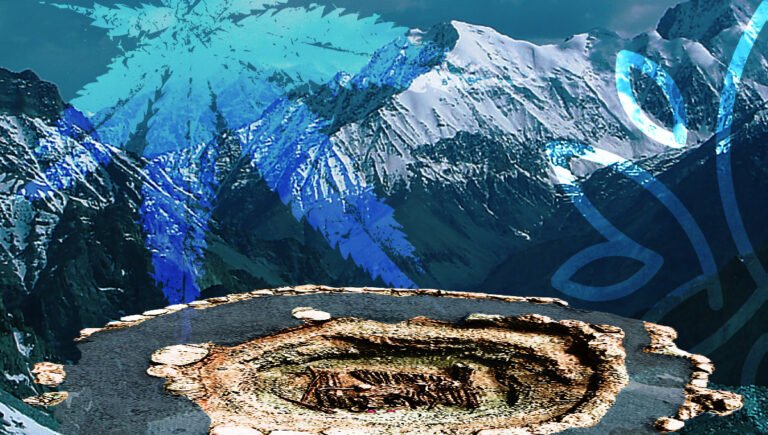
A seed is not a ritual.
A residue is not always a medicine.
At Pazyryk, hemp seeds, heated stones and tent-like equipment bring archaeology close to Herodotus’ Scythian account.
At Yanghai, a large preserved cannabis cache shows the plant selected and stored in a tomb, probably for medicinal or psychoactive use.
At Jirzankal, chemical residues in wooden braziers provide some of the earliest strong evidence for cannabis smoking in a mortuary setting.
At Tel Arad, cannabinoid residues on a Judahite shrine altar show deliberate cannabis use in a cultic context.
At Beit Shemesh, carbonised cannabis-associated material in a childbirth burial gives a powerful but inferential case for medicinal use.
At Stockton-on-Tees, a Roman pot with possible cannabis seeds remains a promising lead, not yet a settled fact.
Together, these finds show why cannabis history needs archaeology.
But residues, seeds, vessels and tombs force the discussion back to evidence.
The question is always:
what exactly does the evidence allow us to say?
Scythian kurgans, Altai Mountains · 5th–3rd century BCE
Here the text
met the ground.
The Pazyryk burials are one of the classic meeting points between text and archaeology.
Herodotus famously described Scythians throwing hemp seed onto hot stones inside a small enclosed space, producing vapour and shouting with pleasure. For a long time, that was a written account. Then archaeology gave it a physical echo.
At Pazyryk, in the Altai region, excavations of frozen Scythian-type kurgans revealed objects connected with hemp use: copper containers, heated stones, hemp seeds and a small tent-like structure. A later review of the evidence notes that a small wooden tent frame was recovered with copper containers in one of the Pazyryk kurgans, and that the containers held stones with evidence of burning and carbonised hemp seeds.
This does not mean every detail of Herodotus was “proved” in a modern courtroom sense.
But it does mean the archaeological record strongly supports the existence of a practice close to what he described: hemp, heat, enclosed space, smoke or vapour, and Scythian funerary or social context.
| Evidence level | strong contextual correlation between text and artefact. |
| Do not overclaim | this is not proof of every detail in Herodotus, but a remarkable archaeological parallel. |
Turpan, Xinjiang · c. 700 BCE / 2,700 years old
The cache was real.
The interpretation must remain disciplined.
The Yanghai find is one of the most important cannabis archaeology cases.
A large cache of cannabis was found in a tomb near Turpan, Xinjiang, associated with a man often described in the literature as a shamanic figure. The 2008 study by Russo and colleagues reported 789 g of cannabis material, preserved by exceptional burial and climate conditions. The sample included shoots, leaves and fruits, with no large stalks, suggesting that the plant material was selected for something other than fibre.
This is not just “some seeds”.
It is a substantial physical deposit of cannabis plant material.
The authors concluded that the cannabis was probably used for medicinal or psychoactive purposes, although they also handled the interpretation cautiously: the tomb context and plant selection support that reading, but archaeology cannot interview the dead.
The popular phrase “oldest stash” is catchy, but LIBERA HERBA should avoid sounding like a tabloid. Better:
One of the earliest well-preserved archaeological cannabis caches associated with possible medicinal or psychoactive use.
| Evidence level | very strong physical evidence for cannabis; the interpretation of its use is strong but remains contextual. |
| Do not overclaim | avoid “proved high-THC medicine”. The material was interpreted as cultivated cannabis used for medicinal, psychoactive or divinatory purposes, but its route of administration is unknown. |
Pamir Mountains, western China · c. 500 BCE
A residue can say
what a seed cannot.
Jirzankal provides the clearest archaeological case in this article for cannabis being deliberately burned in a mortuary setting.
A 2019 Science Advances study analysed wooden braziers from tombs at the Jirzankal Cemetery in the eastern Pamirs. The researchers found chemical residues indicating cannabis had been burned in the braziers during mortuary ceremonies around 500 BCE. The study describes this as some of the earliest directly dated and scientifically verified evidence for ritual cannabis smoking.
This is stronger than seed evidence because it combines:
The chemical profile was consistent with cannabis plants producing higher levels of psychoactive compounds than typical wild populations. The study could not determine whether these plants were cultivated or deliberately gathered.
This is a major LIBERA HERBA case because it shows archaeology moving from “we found cannabis” to
“we found evidence of cannabis being
burned and inhaled in a specific ritual setting”.
| Evidence level | very strong for cannabis burned in a mortuary context. |
| Do not overclaim | “ritual and/or mortuary use” is safer than reconstructing the participants’ exact beliefs or experience. |
Judahite shrine, Negev · 8th century BCE / Iron Age
The altar kept
what the text did not say.
Tel Arad is powerful and sensitive.
The site was excavated in the 1960s, but the crucial chemical analysis was published in 2020. Researchers analysed dark residues preserved on two limestone altars from the Judahite shrine at Arad. On the smaller altar, cannabinoids including THC, CBD and CBN were detected, along with terpenes and other compounds. Organic residues attributed to animal dung were also detected and interpreted as fuel that enabled the cannabis to be heated gently. On the larger altar, frankincense was identified.
This is one of the clearest pieces of evidence for cannabis use in an Iron Age Judahite cultic setting.
But we must phrase it carefully.
Not:
“official monotheistic worship used hashish everywhere”.
Better:
At Tel Arad, cannabis residues were identified on an altar in a Judahite shrine, suggesting deliberate cultic use at that specific site.
That is already strong. It does not need exaggeration.
| Evidence level | very strong chemical residue evidence in cultic context. |
| Do not overclaim | one shrine is not all ancient Israelite religion. |
Near Jerusalem · 4th century CE
The evidence is intimate,
but the interpretation must stay careful.
Beit Shemesh is important, but it needs the strictest wording.
In a 1993 Nature correspondence, Zias and colleagues reported the skeletal remains of a young girl, about 14 years old, who had died in childbirth in a fourth-century CE tomb near Beit Shemesh. A full-term foetus was found in the pelvic area. In the abdominal area, researchers recovered 6.97 g of grey carbonised material. Chemical analysis identified a cannabinoid marker, and the authors assumed the ashes were cannabis, burned and administered as an inhalant to facilitate labour.
This is often repeated as “the first proven obstetric cannabis use”.
LIBERA HERBA should be more careful.
The physical context is striking. The interpretation is plausible. But “100% proved medical/obstetric use” is too strong. The authors themselves use inferential language: they “assume” administration as an inhalant to facilitate birth.
So we write:
one of the earliest physical pieces of evidence interpreted as medicinal cannabis use in childbirth.
Not:
proof beyond all doubt.
| Evidence level | strong physical and contextual evidence; the medical interpretation is plausible but inferential. |
| Do not overclaim | “interpreted as medicinal use during childbirth” is the correct phrase. |
Reported Roman-period pot with possible cannabis seeds · published in media 2024
A headline
is not an excavation report.
In 2024, media reports described a Roman-period vessel from Stockton-on-Tees containing burnt seeds that were being examined as possible cannabis or hemp.
The identification was not confirmed in the report. Until the species identification, laboratory methods and full archaeological context are published, the find should remain a brief pending case rather than a full archaeological entry.
| Evidence level | unconfirmed public report. |
| Do not overclaim | describe the contents only as “reported possible cannabis or hemp seeds”. |
| STEP 1 | Plant presence | Seeds, fibres, pollen, impressions or other plant remains. This shows that cannabis was present. It does not prove intoxication, medicine or ritual by itself. |
| STEP 2 |
Selected plant material |
Large caches of leaves, shoots, fruits, flowers or other non-fibre plant parts. This may suggest use beyond fibre, especially when large stalks are absent. It still requires archaeological context. |
| STEP 3 |
Burning context |
Braziers, censers, hot stones, ash or carbonised remains. These suggest heating, smoke, fumigation or ritual activity. Chemical analysis is still needed where possible. |
| STEP 4 | Chemical residue | THC, CBD, CBN or related biomarkers identified in a vessel, altar or burner. This provides stronger evidence for cannabis preparation or burning. Its meaning still depends on context. |
| STEP 5 |
Contextual convergence |
Chemical residue combined with a vessel, burial, shrine or medical context, secure dating and comparison with written sources. This is where the strongest archaeological interpretations become possible. |
Factual Note
Cannabis archaeology must distinguish plant presence from evidence of selection, preparation, burning, chemical residue and cultural interpretation.
Pazyryk offers a strong archaeological parallel to Herodotus’ Scythian account, but not proof of every detail. Yanghai yielded 789 g of processed cannabis material interpreted as cultivated for medicinal, psychoactive or divinatory use. Jirzankal provides directly dated chemical evidence of cannabis burned in wooden braziers during mortuary ceremonies around 500 BCE. Tel Arad preserves cannabinoid residues on the smaller altar of a Judahite shrine.
The Beit Shemesh material was interpreted as burned cannabis used during childbirth, but that medical reading remains inferential. The Stockton-on-Tees vessel should remain an unconfirmed reported case unless primary analysis establishes the identity of the seeds.
Join early.
Keep the archive open.
The VADEMECUM is becoming a living archive of guides, tools, notes and practical plant knowledge.
Free member access. Join early. Keep the archive open.
Join early.
Keep the
archive open.
The VADEMECUM is not just a book anymore. It is becoming a living archive of guides, tools, notes and practical plant knowledge.
Free member access. Join early. Keep the archive open.
The VADEMECUM is becoming a living archive of practical plant knowledge.
Free member access.