
—orig. developed through MOICANNA
– originally developed through MOICANNA
HEBRARIUM
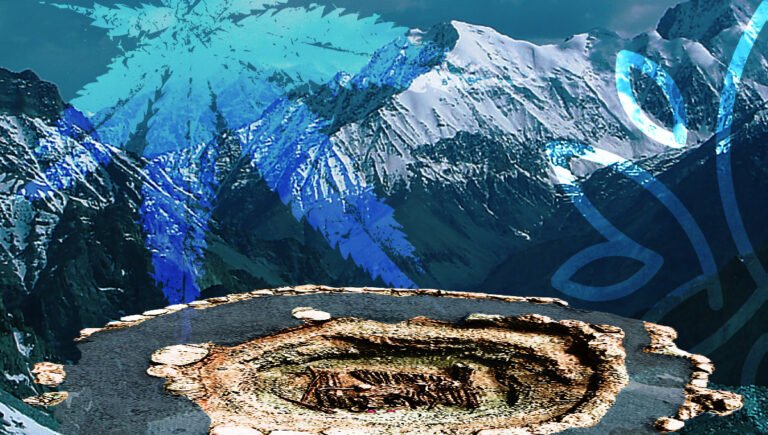
Hemp in space is not a joke.
The joke is thinking space makes it magic.
Cannabis has been called medicine, drug, fibre, food, threat, crop and contraband.
Now it has also become part of space biology.
That sounds like a joke.
It is not.
The joke is thinking space makes it magic.
Hemp and cannabis have entered space research for serious reasons: gene expression, plant stress, radiation exposure, microgravity, tissue culture, crop resilience and the future of controlled-environment agriculture. The plant is not being sent into orbit so someone can write a better headline. It is being sent because plants behave differently under stress — and space is one of the most extreme stress environments available.
In 2019, Space Tango flew a hemp-seed investigation on SpaceX CRS-17 under the title Microgravity Exposure on Medicinal Plant Seeds. The stated aim was to evaluate hemp seeds and their potential biomedical relevance after exposure to microgravity.
That matters.
Not because a month in orbit turns hemp into a miracle crop.
Because it asks a measurable question.
What happens to a plant’s biology when gravity is removed from the normal equation?
In 2020, Front Range Biosciences, SpaceCells and BioServe Space Technologies took the next step with hemp and coffee tissue cultures. Up to 480 plant cell cultures were sent to the International Space Station, housed in temperature-regulated hardware, then returned for analysis of RNA and gene-expression changes after exposure to microgravity and spaceflight conditions.
Again, the value is not the headline.
The value is the method.
That is exactly the LIBERA HERBA line.
If the plant travels to space, the important question
is not “how cool is that?”
The important question is:
what was measured?
A later project, described as Martian Grow, reportedly included cannabis seeds in the MayaSat-1 biological incubator mission for exposure to high-radiation conditions in low Earth orbit. The purpose was to expose biological samples to high-radiation conditions and later study genetic changes, resilience and possible alterations in cannabinoid profiles.
This is where the story becomes tempting.
The plant as a future-civilisation toolkit.
It is a beautiful idea.
It is also exactly where LIBERA HERBA must slow down.
The serious educational value is more disciplined:
Hemp is being considered in space-crop thinking because it is versatile, fast-growing and biologically interesting. But space agriculture requires evidence, not romance. A future crop must be judged by germination, growth rate, water use, nutritional value, biomass, fibre utility, environmental control, disease behaviour, processing needs, crew safety and system cost.
Space makes every claim expensive.
That is why this trace belongs beside Science, Measurement & Modern Knowledge, not beside fantasy.
For LIBERA HERBA, the plant in orbit is a perfect symbol of the new cannabis education.
Just this:
a plant with a long human history is now being placed inside one of
the most demanding research environments we have.
And the only honest question is the scientific one.
What did we learn?
Space does not make cannabis exceptional.
It makes the plant measurable under extreme conditions.
The real questions concern stress response, gene expression, radiation, germination and controlled-environment agriculture—not mythology about cannabis on Mars.
Factual Note
Hemp and cannabis have been included in space-related biological research involving seed exposure, tissue culture, microgravity and radiation. A 2019 Space Tango investigation flew hemp seeds on SpaceX CRS-17, while a 2020 project involving Front Range Biosciences and BioServe sent hemp and coffee tissue cultures to the International Space Station for later analysis.
Later projects have also explored cannabis-seed exposure to harsher radiation environments in low Earth orbit. These missions are research experiments, not evidence that cannabis is ready for agriculture on the Moon or Mars.
Their scientific value depends on published methods, comparison data and reproducible results.
Join early.
Keep the archive open.
The VADEMECUM is becoming a living archive of guides, tools, notes and practical plant knowledge.
Free member access. Join early. Keep the archive open.
Join early.
Keep the
archive open.
The VADEMECUM is not just a book anymore. It is becoming a living archive of guides, tools, notes and practical plant knowledge.
Free member access. Join early. Keep the archive open.
The VADEMECUM is becoming a living archive of practical plant knowledge.
Free member access.