
—orig. developed through MOICANNA
– originally developed through MOICANNA
HEBRARIUM

This is not cannabis knowledge.
This is a warning label.
Some names are dangerous because they make unfamiliar substances sound safe.
“Synthetic cannabis” is one of them.
The phrase suggests a laboratory version of the plant: a substitute, a shortcut, a legal copy, perhaps only a stronger form of the same thing. It is not.
Synthetic cannabinoids are not cannabis.
The name creates familiarity where there should be caution.
“Fake weed” sounds childish.
“Synthetic cannabis” sounds technical.
“Legal high” sounds safer than it is.
But a false name does not make a substance familiar, controlled or plant-based.
It makes people underestimate the unknown.
The danger begins before the substance is even used. It begins when language makes unknown chemistry sound like a recognised plant product.
Cannabis education must not allow a false name to create false safety.
Do not confuse:
A cannabinoid is not automatically cannabis.
Better lesson:
A familiar name is not evidence of a familiar substance.
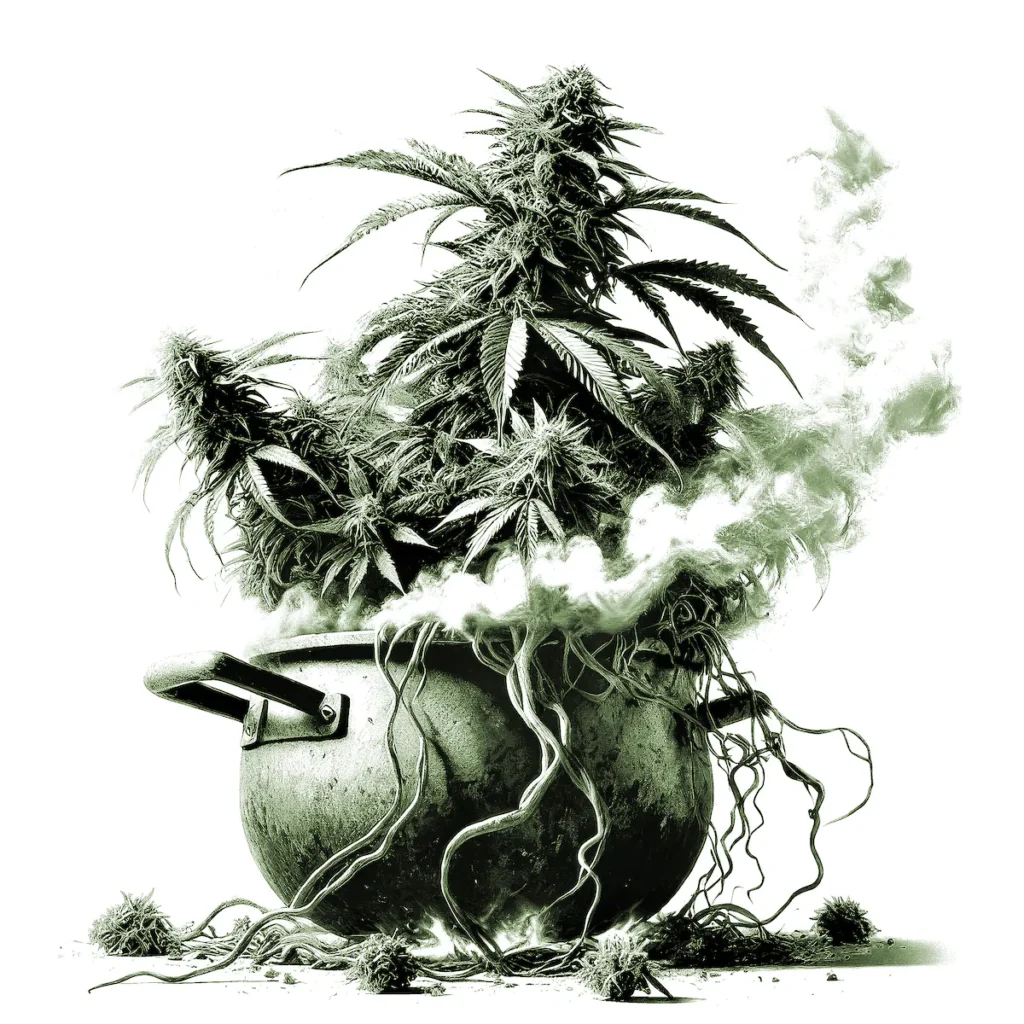
A chemistry pretending
to be a plant.
Synthetic cannabinoids are human-made chemicals that interact with cannabinoid receptors in the body. Some are sprayed onto plant material. Some are sold in liquids for vaping. Some appear under names such as Spice, K2 or “fake weed”. But the plant material is often only a carrier. The active substance is not cannabis flower, resin, seed or oil. It is chemistry pretending to be a plant.
The CDC describes synthetic cannabinoids as hundreds of different manufactured chemicals, with new substances and unknown health risks appearing each year. NIDA describes them as human-made mind-altering chemicals, commonly sprayed onto dried plant material or sold as liquids for vaping.
That distinction matters. Synthetic cannabinoids can produce effects that are very different from cannabis. The CDC warns that products sold as “synthetic marijuana”, “Spice” or “K2” can cause serious side effects very different from those of cannabis.
The European drug agency’s review notes that many synthetic cannabinoids sold on the drug market are much more potent than THC and act as full agonists at cannabinoid receptors, while THC is a partial agonist.
That is not a small technical detail.
It is the danger.
Do not confuse:
Plant material carrying a synthetic chemical is not cannabis.
Better lesson:
A familiar name does not make unknown chemistry familiar.
Stronger is not safer.
Stronger is often the problem.
Many synthetic cannabinoids are far more potent than THC and may act as full agonists at cannabinoid receptors.
That can make dosing unpredictable
and effects much harder to control.
A herb sprayed with chemicals
is not herbal medicine.
Some products are sprayed onto dried plant material.
That can make them look “herbal”, but the active substance is synthetic chemistry.
The plant material is only the vehicle.
The label is not proof.
Testing matters.
Synthetic cannabinoids can appear in products sold or believed to be cannabis or hemp vapes.
That makes source, testing and regulation essential. The danger is not only what people choose, but what they are unknowingly given.
LIBERA HERBA position
LIBERA HERBA does not treat synthetic cannabinoids as cannabis culture. They are discussed only because misleading names, unknown chemistry and contaminated products can place people at serious risk. A manufactured chemical sprayed onto plant material does not become cannabis because the packet uses a leaf.
The name must not create false familiarity.
Factual Note
Synthetic cannabinoids are human-made chemicals that interact with cannabinoid receptors. They are often sold as Spice, K2, “fake weed” or misleadingly as “synthetic cannabis”. They may be sprayed onto plant material or sold as liquids for vaping.
Public-health agencies warn that these substances can be unpredictable and dangerous, with effects that differ from cannabis. Many synthetic cannabinoids are more potent than THC and may act as full agonists at cannabinoid receptors, making dose and effect difficult to control.
LIBERA HERBA treats them as a public-health and safety issue, not as cannabis culture.
Join early.
Keep the archive open.
The VADEMECUM is becoming a living archive of guides, tools, notes and practical plant knowledge.
Free member access. Join early. Keep the archive open.
Join early.
Keep the
archive open.
The VADEMECUM is not just a book anymore. It is becoming a living archive of guides, tools, notes and practical plant knowledge.
Free member access. Join early. Keep the archive open.
The VADEMECUM is becoming a living archive of practical plant knowledge.
Free member access.