
—orig. developed through MOICANNA
– originally developed through MOICANNA
HEBRARIUM
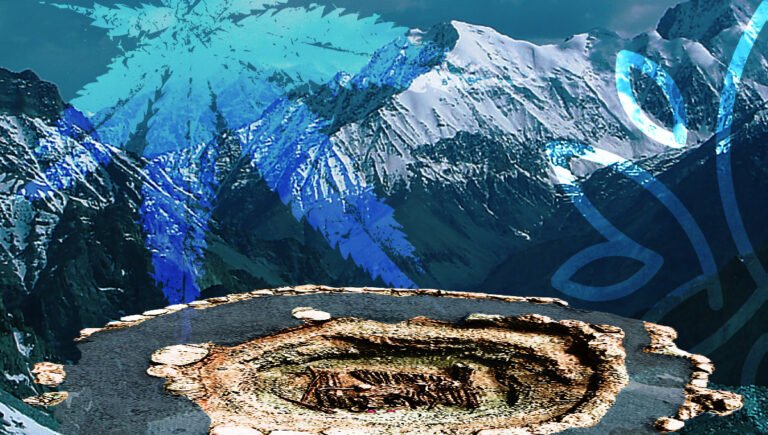
Strange morphology
is not immunity, invisibility or magic.
It is a trait.
Not every cannabis plant looks like the poster.
That is worth remembering.
The familiar cannabis leaf has become so iconic that people often forget it represents only part of the plant’s visual range.
Genetic variation and mutation can produce unusual forms: webbed or deeply divided leaves, variegation, whorled phyllotaxy, compact growth and unfamiliar branching patterns. Selection and breeding may then preserve, combine or further develop some of those traits.
Mutation creates variation.
Breeding decides what happens to it.
Some of these plants have names that sound like jokes.
But the subject is serious enough to handle properly.
Academic discussion of ornamental cannabis has described forms including whorled phyllotaxy, webbed-leaf Ducksfoot types, Australian Bastard Cannabis and variegated cultivars.
Names such as Freakshow and Supafreak belong to breeder and market language. They should be treated as cultivar or line names, not as formal botanical categories.
That does not make them magic.
It is a trait.
A single unusual leaf or branch is not automatically a stable mutation.
Some changes may be somatic, chimeric, developmental or influenced by stress. A breeder must determine whether the phenotype persists through cloning, appears consistently in offspring or disappears when the plant or environment changes.
The “stealth” reputation around these plants is understandable. Some unusual forms may not immediately match the cannabis silhouette familiar to a casual observer. Ducksfoot types have webbed foliage, while Australian Bastard Cannabis has been described as compact and shrub-like, with small, smooth and unusually shaped leaves.
But visual difference is not invisibility. It does not make a plant unidentifiable, odourless, legally protected or reliably concealed.
LIBERA HERBA discusses these forms as morphology and breeding history — never as advice for hiding plants.
The educational point is different.
These forms show how narrow the public image of cannabis has become. Most people recognise one leaf shape and assume that it represents the entire plant.
Cultivation and breeding reveal a wider visual field. Morphology can vary between populations and cultivars. A trait may be heritable, unstable, environmentally influenced or present only in a particular genetic background.
Names often become legends before the underlying trait has been measured properly.
That is where the bro science begins.
Some of these claims may begin with a real observation. The rest may be marketing, grow-room mythology or excitement around a plant that does not resemble the icon.
Unusual does not mean untested claims become true.
A serious grower asks better questions:
Leaf shape cannot reveal chemistry.
A plant with unusual foliage may have an interesting cannabinoid profile, an ordinary one or an undesirable one. Morphology is not a reliable substitute for chemical analysis.
This is where strange plants become useful for education.
They remind us not to mistake appearance for knowledge.
For LIBERA HERBA, unusual cannabis morphology belongs in the Herbarium not as a concealment trick, but as a lesson against visual laziness.
Cannabis is more morphologically flexible than its symbol suggests. That is interesting enough.
It does not need a legend
attached to it.
Factual Note
Cannabis displays substantial morphological variation. Unusual forms discussed in horticultural literature include whorled phyllotaxy, webbed-leaf Ducksfoot types, Australian Bastard Cannabis and variegated cultivars.
Some of these forms have been described as spontaneous or selected mutations. Mutation and breeding are not the same process: a mutation introduces variation, while selection and breeding attempt to preserve, combine or stabilise a desirable trait.
A visually unusual feature is not necessarily heritable. Somatic mutations, chimeras, plant development and environmental stress may affect only part of a plant or may not persist in later generations.
Leaf shape and plant architecture do not reliably determine cannabinoid profile, potency, yield, disease resistance or overall quality. Those characteristics require separate observation, trials or chemical analysis.
Names such as Ducksfoot, Australian Bastard Cannabis, Freakshow and Supafreak should be understood as cultivar, line or market names rather than formal botanical classifications.
Unusual morphology may reduce immediate recognition by an unfamiliar observer, but it does not provide invisibility, legal protection or evidence of superior agronomic performance. LIBERA HERBA discusses these plants as examples of morphology and breeding, not as guidance for concealment.
Join early.
Keep the archive open.
The VADEMECUM is becoming a living archive of guides, tools, notes and practical plant knowledge.
Free member access. Join early. Keep the archive open.
Join early.
Keep the
archive open.
The VADEMECUM is not just a book anymore. It is becoming a living archive of guides, tools, notes and practical plant knowledge.
Free member access. Join early. Keep the archive open.
The VADEMECUM is becoming a living archive of practical plant knowledge.
Free member access.