
—orig. developed through MOICANNA
– originally developed through MOICANNA
HEBRARIUM
Not proof.
A possibility preserved in ice.
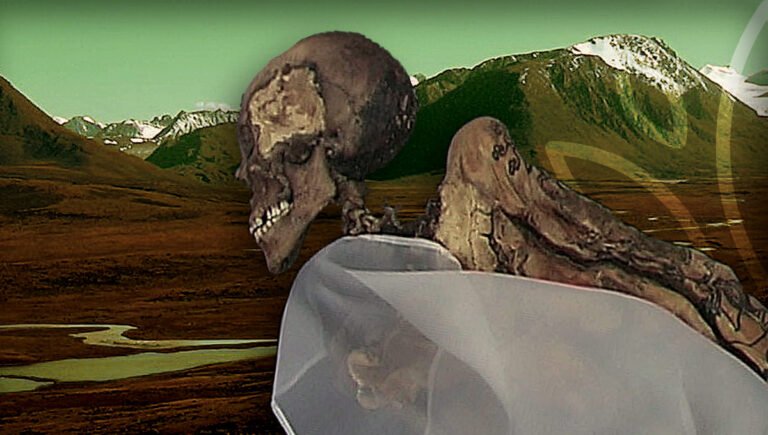
In the frozen kurgans of the Altai Mountains, the so-called Princess Ukok was found preserved in ice: a young Pazyryk woman, tattooed, richly dressed, and buried with objects that speak of status, care and distance travelled.
Modern MRI scans added another layer to the story.
They suggested that she suffered from advanced breast cancer with metastatic spread. The examination also identified osteomyelitis dating from childhood or youth and evidence of severe injuries sustained several months before her death.
Her body was not only a preserved archaeological wonder. It was also the body of someone who had lived with pain.
Cannabis was not identified among the objects in her tomb. A small stone dish contained partially charred coriander seeds, probably used as incense.
The cannabis connection comes from a later interpretation. The excavator Natalia Polosmak proposed that the woman may have inhaled hemp vapour for pain relief and altered states, drawing on evidence that other Pazyryk communities knew and ritually burned hemp.
That is a possibility,
not direct evidence from this burial.
For LIBERA HERBA, the trace matters because of the question it leaves behind.
Not proof.
A possibility.
A sick woman.
An exceptional burial.
A culture familiar with hemp smoke elsewhere.
And the old human need to carry something against pain.
Sometimes the Herbarium does not give certainty.
It preserves the question.
Factual Note
The woman popularly known as Princess Ukok or the Siberian Ice Maiden was buried in the Pazyryk kurgan of Ak-Alakh-3 on the Ukok Plateau approximately 2,500 years ago. “Princess” is a modern popular name; the burial indicates unusual status but does not identify her as royalty.
Later medical imaging was interpreted as showing advanced breast cancer with metastatic spread, earlier osteomyelitis and severe injuries sustained before death.
Cannabis was not identified in her grave. The plant material documented in a small stone dish was partially charred coriander seed. Archaeologist Natalia Polosmak later proposed that the woman may have used hemp vapour for pain relief or altered states because cannabis use is documented elsewhere in Pazyryk culture. This remains an interpretive hypothesis rather than direct evidence from her burial.
Join early.
Keep the archive open.
The VADEMECUM is becoming a living archive of guides, tools, notes and practical plant knowledge.
Free member access. Join early. Keep the archive open.
Join early.
Keep the
archive open.
The VADEMECUM is not just a book anymore. It is becoming a living archive of guides, tools, notes and practical plant knowledge.
Free member access. Join early. Keep the archive open.
The VADEMECUM is becoming a living archive of practical plant knowledge.
Free member access.