
—orig. developed through MOICANNA
– originally developed through MOICANNA
HEBRARIUM
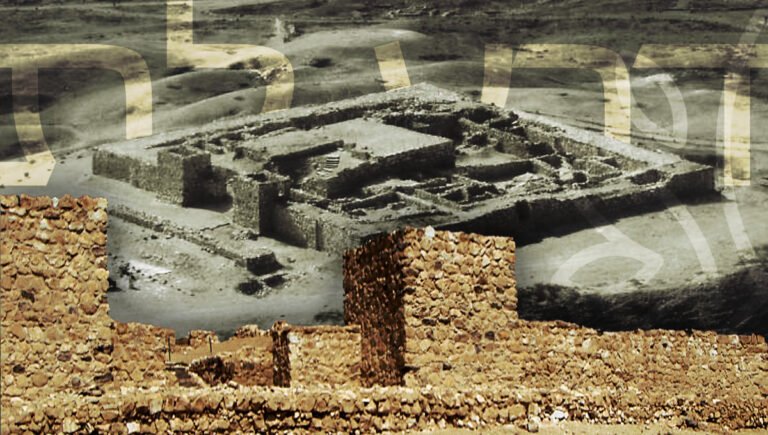
Not fibre. Not food. Not field.
Altar.
In the shrine at Tel Arad, cannabis appears not in a field, not in a rope, not as fibre, but on an altar.
That changes the meaning of the plant.
At this small Judahite shrine on the southern frontier of the kingdom, two limestone altars stood at the entrance to the innermost sacred space. Modern residue analysis identified cannabinoids on the smaller altar and frankincense on the larger one.
The context indicates that cannabis was deliberately heated as part of cultic practice. It was not accidental background material. It belonged to the ritual use of the shrine.
For LIBERA HERBA, this is where the plant crosses an important threshold.
It is no longer only useful or cultivated.
It is no longer only medicinal, textile or practical.
It enters ritual.
A plant placed at the edge of the sacred room.
A substance transformed by heat.
Smoke used not merely to scent a shrine,
but possibly to alter the experience of ritual.
This is why Tel Arad matters so much.
It is one of the clearest archaeological moments in which cannabis appears inside ritual architecture, at the meeting point of matter, symbol and devotion.
One shrine is not an entire religious system.
But one altar is enough to change the record.
Factual Note
Two limestone altars from the eighth-century BCE Judahite shrine at Tel Arad preserved dark organic residues. Analysis published in 2020 identified THC, CBD, CBN and cannabis-related terpenes on the smaller altar, indicating that cannabis material had been heated there.
Residues attributed to animal dung suggest that the cannabis was mixed with fuel that allowed relatively gentle heating. On the larger altar, researchers identified frankincense together with animal fat, probably used to assist evaporation.
The archaeological context strongly supports deliberate cannabis use within the cultic practice of this particular shrine. It does not demonstrate that cannabis was used throughout Judahite religion or at the Jerusalem Temple, and it cannot establish the precise beliefs or experiences associated with the smoke.
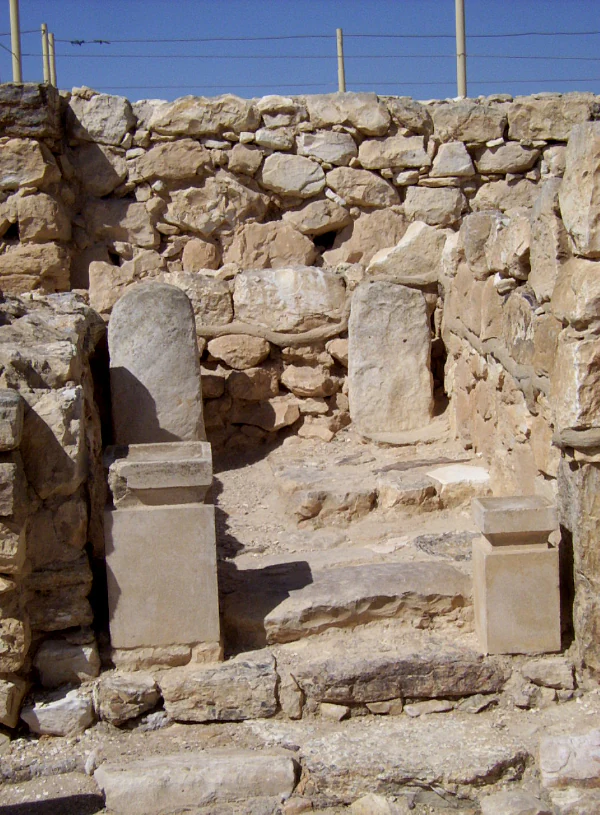 Tel Arad
Kingdom of Judah, southern Levant
8th century BCE
A well-preserved Judahite shrine excavated in the 1960s. Its inner chamber contained two limestone altars with preserved residues.
Chemical analysis later identified cannabis-related compounds on one altar and frankincense on the other, shedding light on incense ritual in Iron Age Judah.
Join early.
Keep the archive open.
The VADEMECUM is becoming a living archive of guides, tools, notes and practical plant knowledge.
Free member access. Join early. Keep the archive open.
Join early.
Keep the
archive open.
The VADEMECUM is not just a book anymore. It is becoming a living archive of guides, tools, notes and practical plant knowledge.
Free member access. Join early. Keep the archive open.
The VADEMECUM is becoming a living archive of practical plant knowledge.
Free member access.