
—orig. developed through MOICANNA
– originally developed through MOICANNA
HEBRARIUM

Cannabis training is not a badge
of expertise.
It is not something the grower does to look advanced.
It is not plant gymnastics for social media.
Training exists for one reason:
to help the plant use the grow space better than it would by accident.
That sounds simple.
It is not.
Because every training decision is also an injury, a delay, a redirection, a stress event or a change in plant architecture. Sometimes the result is stronger structure, better light distribution, cleaner airflow and a more productive canopy.
Sometimes the result is simply
a plant recovering from the grower’s impatience.
The plant should not pay
for the grower’s ego.
Training should solve
a real problem.
If there is no problem, there may be no need for intervention.
This is the first discipline.
Do not train because a technique exists.
Train because the plant,
the space and the goal ask for it.
The body is not a machine
carrying a ghost.
Before topping, pruning, lollipopping or defoliating, ask:
Or am I just doing something because I am nervous?
A cut is a decision. Not a habit.
Low-Stress Training is gentle compared
with cutting or crushing stems.
But it is still training.
Gentle does not mean careless.
LST works best when the grower visits often, adjusts slowly and listens to plant structure instead of forcing a shape from a diagram.
The branch tells you how far it can go.
High-Stress Training can
be useful.
Topping, super cropping, lollipopping and heavy defoliation can shape excellent plants in the right hands.
But HST should not be used to compensate for bad basics.
Stress is not magic.
Stress is a tool.
A tool used at the wrong time becomes damage.
The beginner
sees branches.
The experienced grower
sees canopy.
Training is not about making more tops for the sake of more tops. It is about arranging growth so light reaches useful sites evenly, air moves through the plant, and the grower can inspect, water and support the crop.
More bud sites do not always mean better harvest.
They may mean more small, shaded, weak flowers and more work for the same result.
Training should create quality positions,
not decorative clutter.
Every plant has
a recovery budget.
A healthy, vigorous plant in a stable environment
can recover quickly from training.
A stressed plant cannot.
Heat stress, overwatering, root restriction, nutrient imbalance, pest pressure, weak light, poor airflow or unstable humidity all reduce the plant’s ability to respond well.
Training does not happen in isolation.
A plant recovering from bad conditions does not need advanced techniques.
It needs better conditions.
The grower must learn the difference between
shaping growth and adding stress to stress.
The body is not a machine
carrying a ghost.
That old not whether cannabis makes life feel better.
The serious question is what kind of better
it makes possible.
Seedlings need protection,
not ambition.
There is a time to shape and a time to leave alone.
The grower who misses the first window
often damages the second.
Training becomes harder
when different cultivars
share one space.
This is why mixed tents require planning.
Do not train all cultivars the same way just because they share a room.
A cultivar is not only a name.
It is behaviour.
A trellis net can be excellent.
It can also become a prison.
A trellis-net supports branches, spreads canopy and helps manage space. But once the plant is woven through it, movement becomes difficult. Inspection, cleaning, pot rotation, flushing, plant removal and pest response may become harder.
The trellis gives structure.
It also takes freedom.
Use it when the benefit is clear.
Do not install a net
just because the grow looks more professional with squares.
Professional is not what the room looks like.
Professional is what the room
allows you to do.
Defoliation is one of the easiest techniques
to overuse.
The argument is simple:
remove leaves to improve airflow and light penetration.
Sometimes correct.
But leaves are not decoration. They are energy systems, transpiration surfaces and nutrient reserves. Removing them should serve the plant and the environment, not the grower’s need to “clean up” every natural shape.
Good defoliation opens the plant.
Bad defoliation humiliates it.
Ask:
A leaf should not be removed
because the grower is bored.
The body is not a machine
carrying a ghost.
Training has a stopping point.
That point is not reached when the grower runs out of techniques.
It is reached when the canopy is functional.
That is enough.
The mature grower knows when
to stop improving.
Training should feel less like construction
and more like conversation.
The grower suggests a shape.
The plant answers.
The plant is not refusing education.
It is giving feedback.
The goal is not to force the plant into the grower’s imagination.
The goal is to guide the plant into
a form the room can support.
Training is not proof that the grower
is advanced.
Training is proof only if the plant becomes healthier, better lit, better aired, easier to manage and more capable of finishing well.
Train when structure needs guidance.
Stop when the plant has answered.
Training is not proof that the grower is advanced.
Training is proof only if the plant becomes healthier, better lit, better aired, easier to manage and more capable of finishing well.
Train when structure needs guidance.
Stop when the plant has answered.
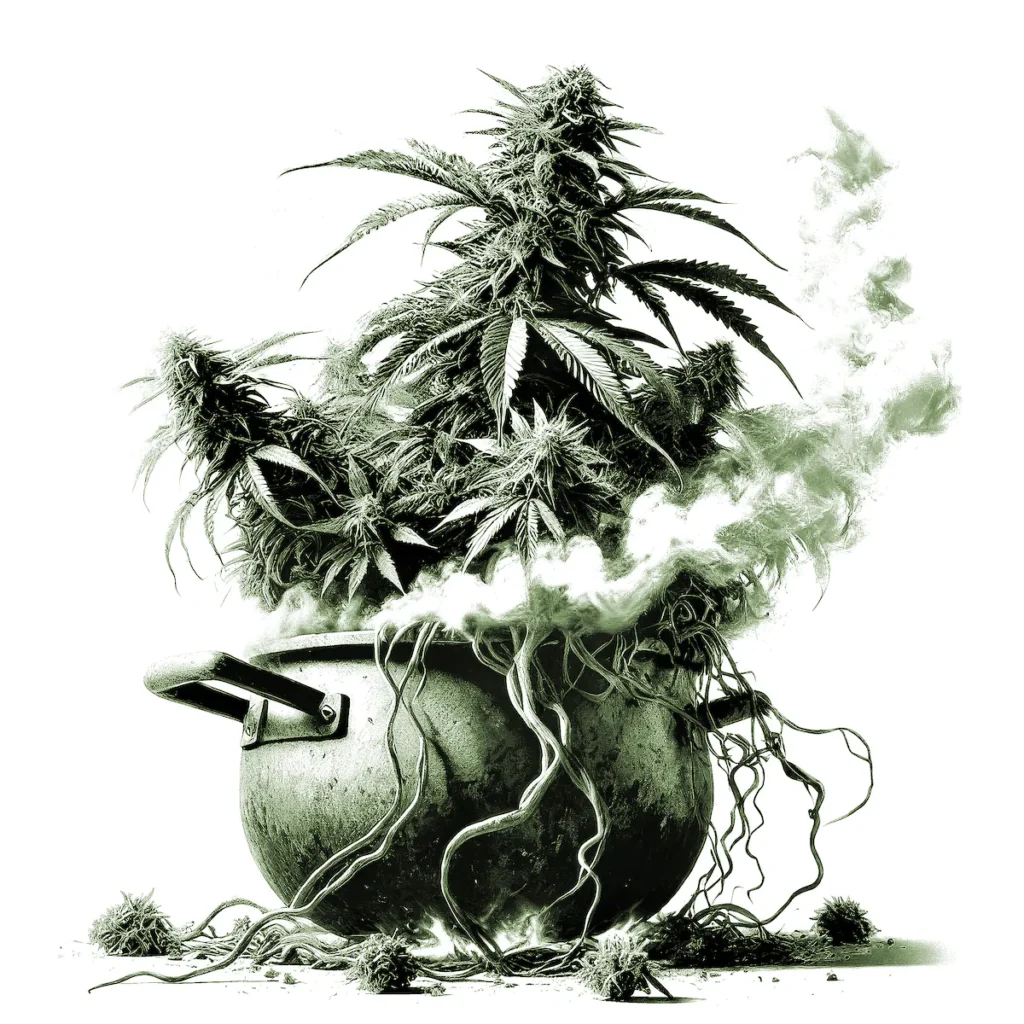
Join early.
Keep the archive open.
The VADEMECUM is becoming a living archive of guides, tools, notes and practical plant knowledge.
Free member access. Join early. Keep the archive open.
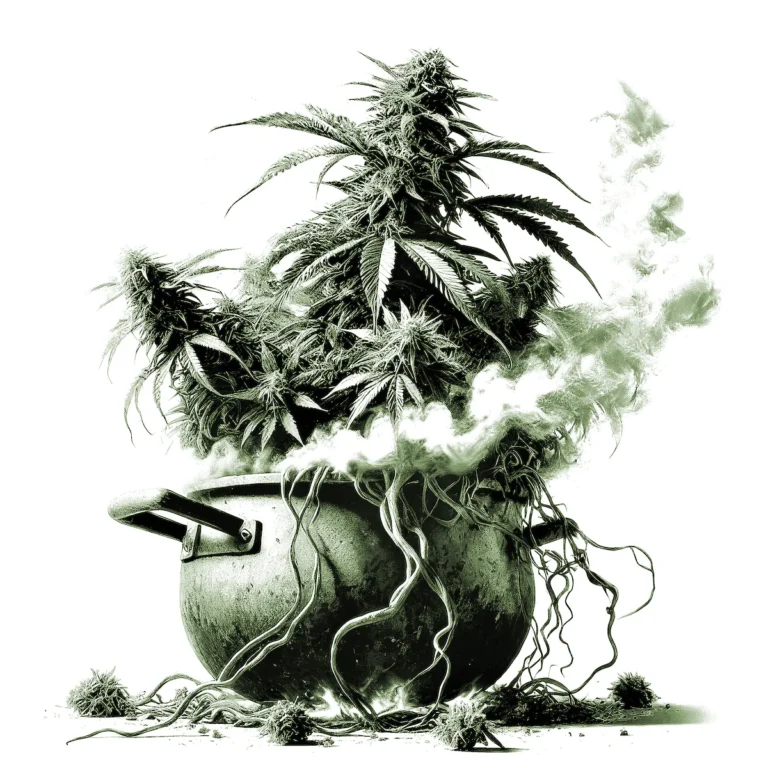
Join early.
Keep the
archive open.
The VADEMECUM is not just a book anymore. It is becoming a living archive of guides, tools, notes and practical plant knowledge.
Free member access. Join early. Keep the archive open.
The VADEMECUM is becoming a living archive of practical plant knowledge.
Free member access.