
—orig. developed through MOICANNA
– originally developed through MOICANNA
HEBRARIUM

Prohibition did not only hide the plant.
It hid the lesson.
That may be one of its deepest damages.
When cannabis is forced into secrecy, knowledge does not disappear. It mutates through rumours, coded language, underground books, friends, dealers, forums, half-truths and dangerous confidence.
Some of that knowledge saves people.
Some of it harms them.
Secrecy is not
a quality-control system.
A hidden grower cannot
ask freely.
A hidden grower cannot explain the room honestly to an electrician, ask openly about ventilation, bring a leaf to an agronomist, discuss mould or pests, compare mistakes, or keep records that may later become evidence.
So he improvises.
Sometimes brilliantly. Sometimes disastrously.
This is the double nature of underground knowledge.
It creates ingenuity,
but it also creates avoidable harm.
Good education requires
a chain.
Prohibition breaks that chain.
Then the next grower repeats it.
And the next. And the next…
The same damage happens
in medical use.
Silence does not protect the patient.
It often abandons the patient to weaker sources.
Cannabis education must be honest about this: people use cannabis whether institutions are ready or not. The question is whether they learn from evidence, or from the loudest person in the room.
Secrecy sometimes protects
the vulnerable.
That must be respected.
Cannabis history is full of people who hid because hiding was survival.
But secrecy also protects bad products, bad advice, unsafe extraction, poor dosing, dangerous storage, faulty electricity, weak ventilation and persistent myths.
Legalisation does not automatically solve this.
The problem is not only legality.
The problem is whether knowledge can be checked.
Prohibition creates a shame tax.
People pay it with ignorance.
They pay it when they cannot ask basic questions, learn through accidents, hide symptoms, accept contaminated products or believe myths because no safer education exists.
A society that refuses cannabis education does not create non-use.
It creates private use with public ignorance.
Some underground knowledge
deserves preservation.
Some does not.
A cannabis archive must understand secrecy, trust and risk. Not every story belongs to the archive, not every truth should be published and not every underground technique deserves romanticisation.
Legalisation does not retroactively erase
the conditions under which trust was given.
The lesson is simple:
We record cannabis history
without looting the people who carried it.
Secrecy may have protected people.
But secrecy also damaged education.
The task now is not to expose everything.
The task is to build safer ways for knowledge to move.
Prohibition hid the plant.
LIBERA HERBA should help recover the lesson.
Factual Note
Prohibition can restrict access to professional advice, testing, medical disclosure, safe electrical work, pest diagnosis and reliable record-keeping. This does not mean all underground knowledge is false or harmful; much of it developed as practical adaptation under criminalisation.
Secrecy can protect vulnerable people from punishment, stigma or exposure. It can also shield unsafe products, weak advice, contamination, coercion and preventable cultivation hazards.
Legalisation does not automatically produce trustworthy knowledge. Product testing, professional education, medical literacy, transparent standards and ethical handling of private testimony remain necessary.
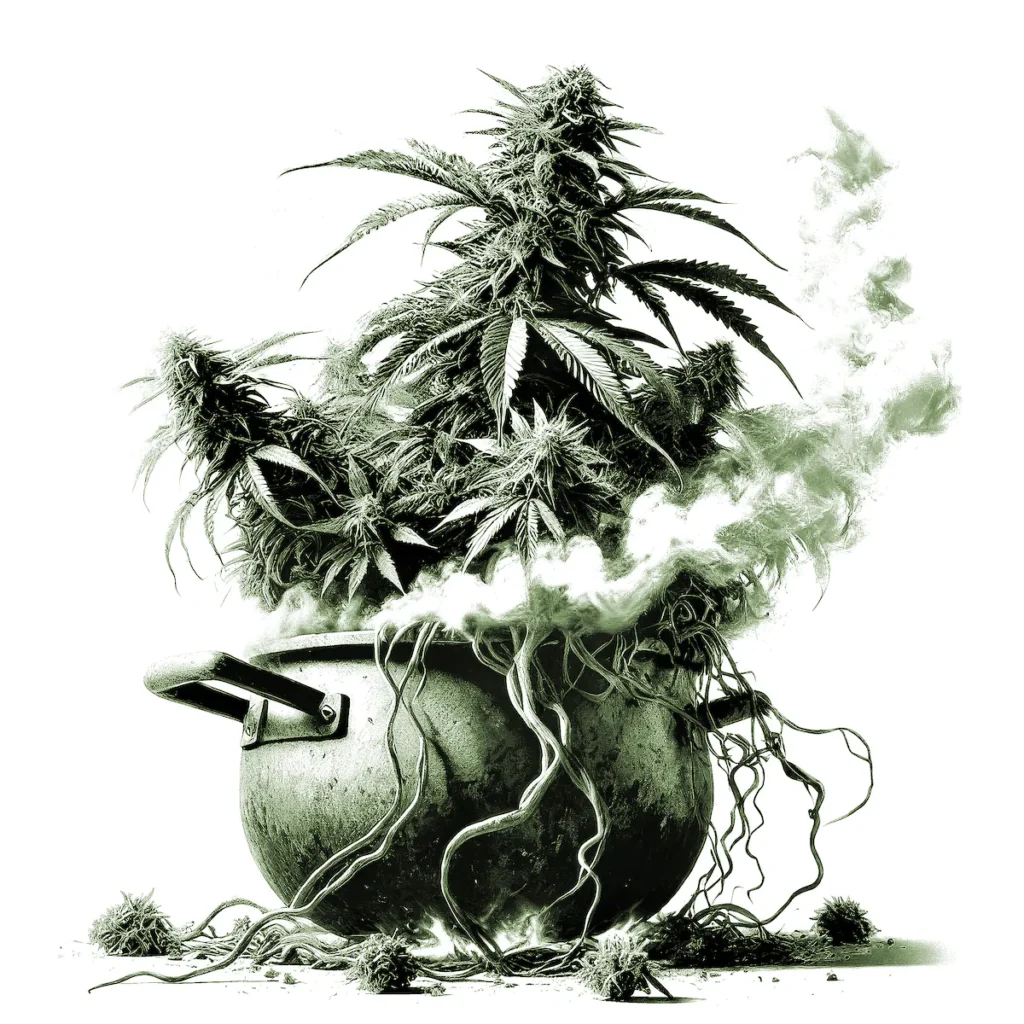
Join early.
Keep the archive open.
The VADEMECUM is becoming a living archive of guides, tools, notes and practical plant knowledge.
Free member access. Join early. Keep the archive open.
Join early.
Keep the
archive open.
The VADEMECUM is not just a book anymore. It is becoming a living archive of guides, tools, notes and practical plant knowledge.
Free member access. Join early. Keep the archive open.
The VADEMECUM is becoming a living archive of practical plant knowledge.
Free member access.