
—orig. developed through MOICANNA
– originally developed through MOICANNA
HEBRARIUM

A useful plant creates tools
around it.
Hemp has often been trapped between two bad stories.
One story makes it magic: the plant that secretly built civilisation, invented paper, powered ships, saved farmers and could have changed everything if history had not interfered. The other story makes it marginal: a rough old fibre, useful once, then replaced by better materials and modern industry.
Both stories are too simple.
Hemp did not invent civilisation.
But it did solve material problems that civilisation needed solved.
Before cannabis became a modern legal argument, hemp was a processing problem. Its bast fibre had to be separated from the woody core, cleaned and prepared before it could become rope, cloth, sacks, canvas or paper.
The plant was not valuable because it was symbolic.
It was valuable because people knew how to make it useful.
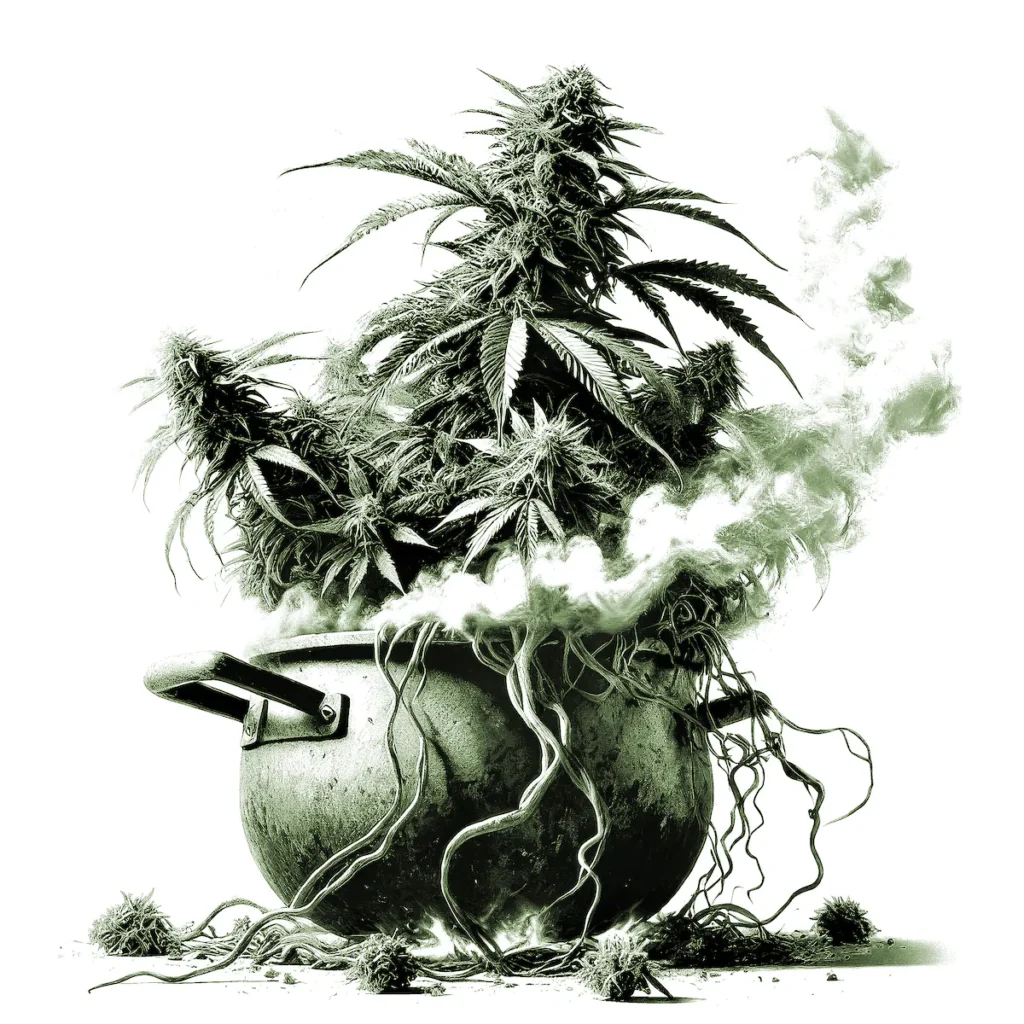
A useful plant creates tools around it.
Paper offers one example, but not the whole story.
Early Chinese papermaking drew on several fibrous materials, including hemp waste, bark, old textiles and discarded fishing nets. Hemp belonged to that material vocabulary, but it neither invented paper nor supplied every sheet.
Its importance lies in participation: fibre that had served one purpose could be broken down and made into a surface for writing.
The same discipline is needed with the decorticator.
In 1919, George W. Schlichten received a United States patent for machinery intended to decorticate, clean, scutch, comb and mechanically degum several stem-fibre plants, including hemp, flax, jute and ramie. The design was intended particularly for dry, unretted material.
The patent was not a miracle and does not prove commercial success. It documents an attempt to solve a real industrial problem: how to separate usable fibre from the rest of the stalk with less manual processing.
In February 1938, Popular Mechanics published “New billion-dollar crop”, presenting mechanised decortication as the solution to an ancient labour problem.
The article belongs to a moment of industrial optimism. It is evidence that editors, engineers and manufacturers imagined new uses for an old fibre — not proof that hemp was about to replace every competing material, or that a completed technological revolution was later suppressed.
The technology matters because the problem was real.
Between plant and product there is always technique.
That is the real lesson. Hemp did not change the material world simply by being hemp. It became technology when agricultural knowledge, mechanical processing, chemistry and markets aligned.
This is also where cannabis history needs restraint.
It is easy to say that hemp “gave us paper” or “would have saved industry”.
The stronger claim is narrower. Hemp supplied a useful bast fibre, participated in early papermaking and encouraged repeated attempts to improve mechanical fibre separation.
Its history exposes the distance between a plant’s potential and the infrastructure required to use it.
A plant does not become technology by itself. It becomes technology when someone solves the material problem around it.
Hemp’s real achievement is not that it secretly explains everything. It is that it repeatedly appeared wherever humans needed fibre that could work: to bind, carry, write, sail, wrap, strain, pull, pack and record.
The plant was useful before it was controversial.
That is enough.
Factual Note
George W. Schlichten received United States Patent No. 1,308,376 in 1919. The patent described machinery for decorticating, mechanically degumming, cleaning, scutching and combing several fibre-bearing plants, including hemp, flax, jute and ramie, particularly in dry and unretted form. A patent documents an invention and its claims; it does not establish widespread commercial adoption.
In February 1938, Popular Mechanics published “New billion-dollar crop”. The article argued that mechanised decortication could reduce the labour required to separate hemp fibre from the woody stalk. It should be read as a period document of industrial promotion and optimism, not as proof of a suppressed hemp revolution.
Hemp also belonged to the early history of papermaking, alongside bark, rags, fishing nets and other plant fibres. Its historical importance lies in participation rather than exclusivity: hemp helped solve material problems, but it was never the only fibre capable of doing so.
Join early.
Keep the archive open.
The VADEMECUM is becoming a living archive of guides, tools, notes and practical plant knowledge.
Free member access. Join early. Keep the archive open.
Join early.
Keep the
archive open.
The VADEMECUM is not just a book anymore. It is becoming a living archive of guides, tools, notes and practical plant knowledge.
Free member access. Join early. Keep the archive open.
The VADEMECUM is becoming a living archive of practical plant knowledge.
Free member access.