
—orig. developed through MOICANNA
– originally developed through MOICANNA
HEBRARIUM
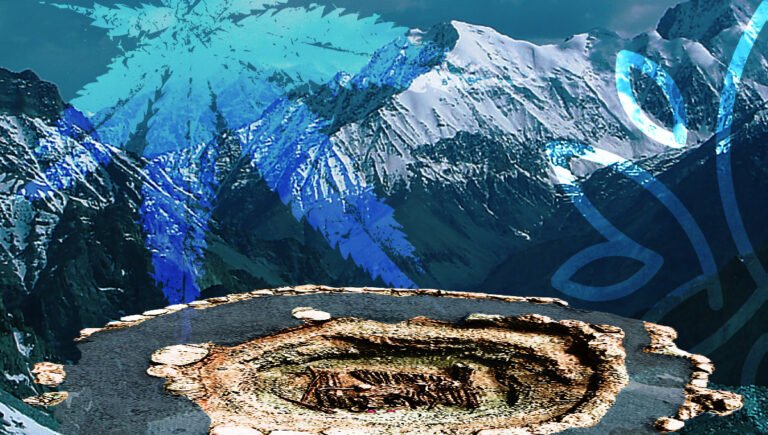
Sometimes the plant
is not the subject.
It is the material that allows
the subject to survive.
Before science could photograph the world, it had to draw it.
That is why scientific illustration matters to LIBERA HERBA.
Not as decoration.
As method.
Cannabis history often depends on words: hemp, cannabis, marijuana, ganja, hashish. But the plant also belongs to a history of images: herbals, materia medica, anatomical atlases, botanical drawings, pharmacy labels, seed catalogues and museum plates.
The image helped knowledge travel.
Before photography, a good drawing was not “art beside science”. It was often the evidence itself.
Leonardo da Vinci shows the principle at its highest level. His notebooks are not cannabis history, but they belong to the wider material history of hemp paper. His botanical, anatomical and mechanical studies depended on paper — and Renaissance paper was commonly made from rag fibres such as linen and hemp. One botanical-art source notes that Leonardo’s drawings were done on paper made from hemp or linen clothing rags.
That matters.
The plant does not appear only as subject.
Sometimes it appears as support.
Hemp paper helped carry observation.
A line of ink, a plant study, a machine sketch, an anatomical note — these survived because the material held.
Albrecht Dürer offers another lesson. His Great Piece of Turf is not about cannabis, but it is about the dignity of exact plant observation. Instead of using plants as background, Dürer made an ordinary patch of vegetation worthy of close study. The work is often discussed as a landmark of botanical accuracy and nature observation.
That is the shift LIBERA HERBA cares about.
The plant is no longer decoration.
It becomes evidence.
Jan Wandelaar and Bernhard Siegfried Albinus show the same principle in anatomy. Their 1747 anatomical atlas, Tabulae sceleti et musculorum corporis humani, depended on the collaboration of anatomist and artist. In a period when many anatomical atlases were inaccurate, Albinus and Wandelaar made precision, measurement and image-making part of the scientific claim.
This is important because cannabis education often treats images too casually.
But scientific images are never neutral. They teach people what to notice. They can clarify. They can mislead. They can become evidence, symbol or cliché.
Maria Sibylla Merian brings the lesson into ecology.
Her great work on Surinamese insects did not simply isolate specimens. She showed insects in relation to the plants that fed them, housed them and shaped their life cycles. Her observations of metamorphosis and host plants helped move natural history away from isolated curiosity and towards relationships between living things.
That is the deeper visual lesson: a plant is not only itself.
It is also the world that grows with it.
For cannabis, this matters.
A cannabis image should not only ask:
what does the leaf look like?
It should ask:
The older herbals make this especially clear. Plants had to be described and drawn so that physicians, apothecaries, students and readers could identify them. Dioscorides’ cannabis description, preserved through later manuscript and herbal traditions, placed the plant inside materia medica: leaves, smell, hollow stalk, fruit, use.
Later printed herbals such as Leonhart Fuchs’ De historia stirpium helped establish the discipline of botanical illustration as a tool of recognition. Fuchs aimed to reproduce each plant from nature, and his work depended on named artists and woodcutters who translated living specimens into images that readers could use.
This is the standard LIBERA HERBA should inherit.
The image must serve knowledge.
Knowledge.
If cannabis appears in an image, the image should make the plant more readable: fibre, flower, seed, resin, gland, root, bottle, tool, paper, field, law, archive, symptom, measurement.
The leaf alone is not enough.
A good scientific image does not simply show.
It teaches the eye what matters.
A useful cannabis image should make
the plant more readable.
It should show what is being observed, measured, prepared, classified or compared. It should reveal context rather than replace it with a symbol.
The leaf alone may identify cannabis.
It rarely explains it.
Factual Note
Scientific illustration played a central role in pre-photographic knowledge. Leonardo’s notebooks show observation as method and were drawn on paper made from rag fibres such as hemp and linen.
Dürer’s Great Piece of Turf stands as a landmark of close plant observation. Albinus and Wandelaar’s 1747 anatomical atlas shows the collaboration of scientist and artist in producing precise visual evidence. Maria Sibylla Merian’s work on insects and host plants helped natural history understand life cycles and ecological relationships.
Cannabis itself appears in the older herbal and materia medica tradition, where description and illustration helped identify plants for medical and practical use.
Join early.
Keep the archive open.
The VADEMECUM is becoming a living archive of guides, tools, notes and practical plant knowledge.
Free member access. Join early. Keep the archive open.
Join early.
Keep the
archive open.
The VADEMECUM is not just a book anymore. It is becoming a living archive of guides, tools, notes and practical plant knowledge.
Free member access. Join early. Keep the archive open.
The VADEMECUM is becoming a living archive of practical plant knowledge.
Free member access.