
—orig. developed through MOICANNA
– originally developed through MOICANNA
HEBRARIUM

Cannabis
does not travel alone.
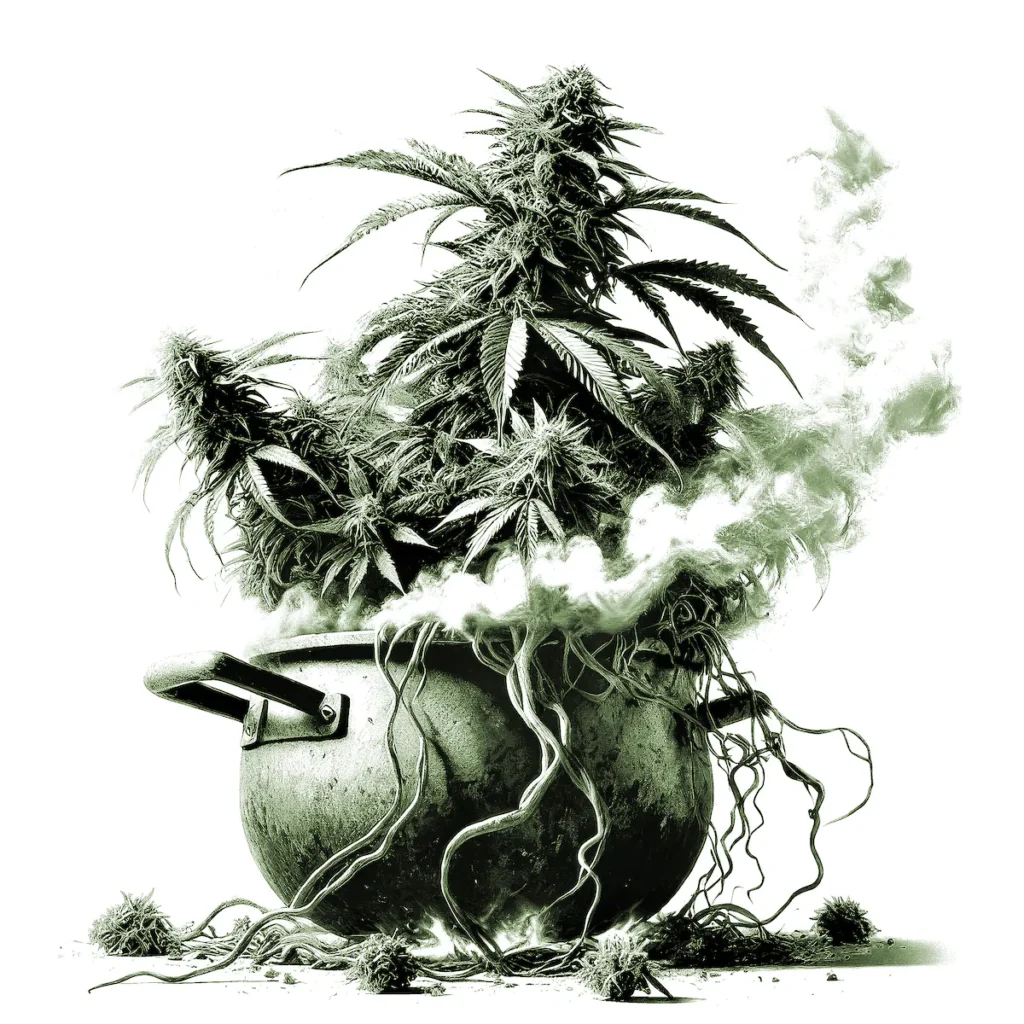
Where the plant goes, other markets follow: lights, nutrients, seeds, glassware, filters, tests, packaging, odour control, legal advice, software, extraction tools, hospitality tricks, compliance systems, stealth devices and a long parade of objects designed for one purpose: to live near a rule without being crushed by it.
This is not a moral courtroom.
A product built around a loophole is not automatically evil. A person selling a workaround is not automatically a villain. Sometimes the workaround exists because the rule is clumsy, excessive, outdated or detached from real life. Sometimes it exists because people want freedom without responsibility. Often, both things are true at once.
That is the uncomfortable part.
Cannabis culture has always produced ingenuity. Under prohibition, ingenuity became survival language. People learned how to hide smell, hide plants, hide possession, hide use, hide money, hide illness, hide pleasure, hide medicine, hide fear. Some of that ingenuity was brave. Some of it was dirty. Some of it became business.
Legalisation does not end this pattern.
It changes its shape.
Once cannabis enters regulated life, the surrounding inventions become more polished. They move from the basement to the trade fair. From rumour to packaging. From street trick to branded solution. The old underground whisper becomes a booth, a catalogue, a QR code and a payment terminal.
The plant escapes prohibition.
The workaround gets a logo.
This should not surprise us. Every rule creates a shadow economy of interpretation. Drug testing creates products around testing. Smoking bans create products around smell. Hospitality restrictions create products around discretion. Packaging rules create packaging consultants. Licensing creates compliance companies. Tax pressure creates accountants who know the plant better than some growers do.
The cannabis economy is never only the plant.
It is also the ecosystem of pressure around the plant.
This is why cannabis education must look beyond cultivation and consumption. It must also study the strange objects that appear near the law. These objects tell us what people are afraid of. They show us where regulation hurts. They reveal where desire refuses to disappear. They expose the distance between official policy and lived behaviour.
A market workaround is a symptom.
If people are constantly buying tools to hide from a rule, the rule deserves examination. If businesses thrive by helping consumers pretend reality is different from what it is, the culture deserves examination too.
Good regulation reduces the need for stupid evasion. Bad regulation creates professional evasion and then acts surprised when professionals arrive.
Cannabis drags other weeds behind it: inventions, excuses, jobs, hacks, services, gadgets, rituals, loopholes, patents and grey economies. Some should be welcomed. Some should be watched. Some should make us laugh. Some should make us nervous.
But none should be ignored.
Because the objects around the plant
often tell the truth before the law does.
Join early.
Keep the archive open.
The VADEMECUM is becoming a living archive of guides, tools, notes and practical plant knowledge.
Free member access. Join early. Keep the archive open.
Join early.
Keep the
archive open.
The VADEMECUM is not just a book anymore. It is becoming a living archive of guides, tools, notes and practical plant knowledge.
Free member access. Join early. Keep the archive open.
The VADEMECUM is becoming a living archive of practical plant knowledge.
Free member access.