
—orig. developed through MOICANNA
– originally developed through MOICANNA
HEBRARIUM
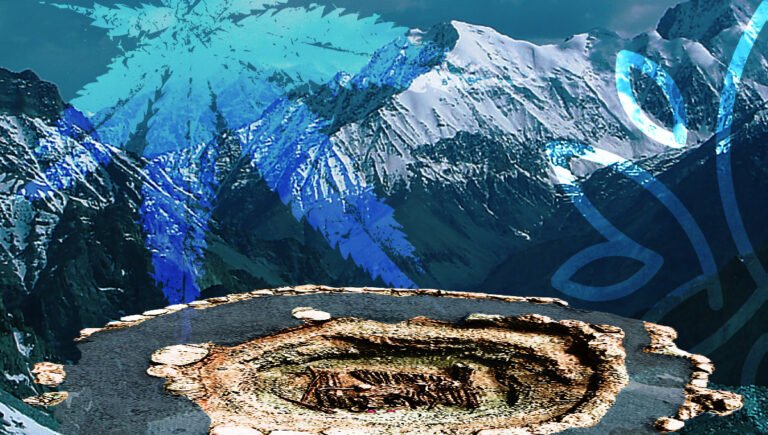
Prohibition has a comforting fantasy
at its centre.
Ban the thing, and the thing will disappear.
Sometimes society must prohibit. There are acts so dangerous, exploitative or irreversible that no serious person can treat them as ordinary freedoms. Human cloning, for example, raises ethical, biological and social dangers that cannot be dismissed with a clever argument about progress.
But the hard question remains:
Does prohibition prevent the act, or
does it remove the act from public knowledge?
That is where the lesson begins.
But a law does not automatically erase desire, profit, ambition, ideology, curiosity or technical capacity.
When something remains technically possible and powerfully tempting, the ban may create a second world: hidden laboratories, private networks, illegal markets, whispered expertise, unreported failures, unverified claims, desperate clients and no public correction.
The monster is not always destroyed.
Sometimes it is simply moved underground.
Cannabis prohibition did not eliminate cannabis.
It changed the conditions around it.
The plant survived.
The culture around it often became uglier.
That is the uncomfortable truth: some harms came from the plant, but many came from the system built to suppress the plant.
And once that system exists, people adapt to it.
That is not public health.
That is darkness with paperwork.
Human cloning is a far more serious ethical territory
than cannabis.
The stakes are different. The harms are different. The moral weight is different.
But your point is not “let it happen”.
Your point is sharper: If it can be done, someone somewhere may try. So the question is not only how loudly we prohibit it, but how intelligently we prevent it, detect it, understand it and build shared ethical resistance to it.
That is the mature position.
Not naive permission.
Not naive prohibition.
A society that only says “never” may feel morally clean, but if the work continues in hidden spaces, then knowledge, oversight and accountability are lost. Bright minds may produce knowledge behind closed doors. Failures may be buried. Victims may be invisible. Techniques may leak without ethics. And by the time the public learns what happened, the lesson may arrive too late.
So yes:
It may be utopian to believe forbidden things will never be attempted.
But it is stupid not to try collectively to prevent what should not be done.
The difference is this:
Prevention needs knowledge. Prohibition often fears knowledge.
That is the trap.
The opposite of prohibition
is not chaos.
This is where people get lazy. They hear criticism of prohibition and assume the speaker wants permission for everything.
No. The opposite of blind prohibition is not blind permission.
The opposite is:
In cannabis, that means: regulation, testing, age protection, honest medical research, clean products, public education and less criminal theatre.
In biotechnology, it means: strong ethics, international oversight, whistleblower protection, transparent research norms, serious penalties for abuse, and enough public scientific literacy that society is not forced to choose between panic and ignorance.
Different fields. Same lesson:
A boundary without knowledge becomes superstition.
Knowledge without boundaries becomes arrogance.
Because it concentrates power
in the wrong hands.
Then who remains?
This is how prohibition can become selective breeding for bad actors.
Not always. Not in every case.
But often enough to matter.
It removes the cautious and rewards the shameless.
That is why the old cannabis market was so dirty. Not because cannabis magically made people bad, but because the system selected for people willing to operate without accountability.
A dirty system does not only hide monsters.
It trains them.
Join early.
Keep the archive open.
The VADEMECUM is becoming a living archive of guides, tools, notes and practical plant knowledge.
Free member access. Join early. Keep the archive open.
Join early.
Keep the
archive open.
The VADEMECUM is not just a book anymore. It is becoming a living archive of guides, tools, notes and practical plant knowledge.
Free member access. Join early. Keep the archive open.
The VADEMECUM is becoming a living archive of practical plant knowledge.
Free member access.