
—orig. developed through MOICANNA
– originally developed through MOICANNA
HEBRARIUM

Before cannabis became a modern argument,
má was work.
In ancient China, cannabis did not enter history as a scandal.
It entered as má.
The word má (麻) was closely associated with hemp and bast fibre, although its precise meaning depends on period and context. Around it stood a larger material world of cloth, cordage, cultivation and household labour. Long before the plant became trapped in modern arguments about intoxication and prohibition, hemp belonged to the material life of Chinese civilisation.
It was not one thing.
Its fibre became rope, cloth and paper.
Its seed entered food and medicine.
Its cultivation meant labour.
Archaeological and textual evidence places hemp among the established fibre and oilseed crops of early China. It supplied clothing, cordage and fishing nets; its seeds entered food and medical traditions; and its fibre became one of the materials used in early Chinese papermaking.
That range matters.
A plant with only one use can become symbolic.
A plant with many uses becomes infrastructure.
The military trace is tempting, but it should remain small.
Durable fibre mattered wherever societies depended on ropes, nets, carts, harnesses and weapons. Popular accounts often single out hemp bowstrings or describe the crop as an early strategic military resource, but those claims need stronger primary evidence before they become central to the story.
Hemp did not need to “win wars” to matter.
In a world held together by cordage, fibre was already power.
The plant also appears in the older literary memory of China. The Shijing, or Book of Odes, refers to planting hemp, steeping it, twisting it and wearing hemp cloth.
These are not images of intoxication. They belong to agriculture, textile work and household economy.
Hemp appears as work transformed into material.
This is the correction.
Ancient China does not need to be turned into cannabis mythology.
The real story is stronger.
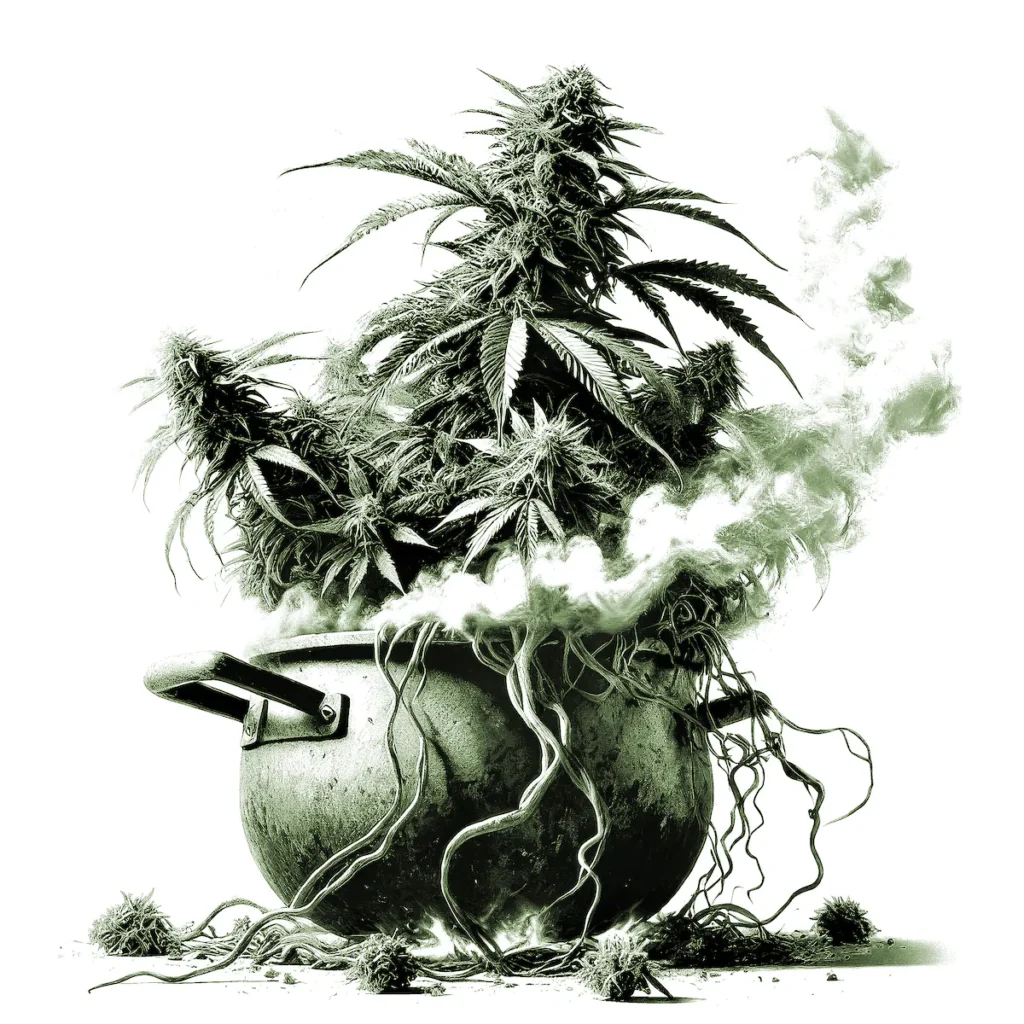
Má was not hidden at the edge of society. It sat close to the centre of practical life: grown, harvested, soaked, stripped, spun, woven, made into paper and remembered.
For LIBERA HERBA, this trace belongs in the Herbarium because it restores scale.
Cannabis was not always a forbidden plant.
In ancient China, it was a working plant.
Not noise. Material.
Factual Note
Má (麻) is an old Chinese term closely associated with hemp, although its meaning can extend to other bast-fibre plants and materials depending on period and context.
Archaeological and textual evidence shows that Cannabis sativa functioned as both a fibre and oilseed crop in early China. Hemp fibre was used for clothing, rope, fishing nets and paper, while its seeds entered food and medical traditions.
The Shijing, or Book of Odes, contains references to planting, steeping and twisting hemp and to hemp clothing, placing the plant within agriculture and household textile work. Claims that hemp bowstrings gave Chinese armies a decisive advantage, or that rulers formally treated hemp as a “war crop”, should not be repeated without stronger primary evidence.
Join early.
Keep the archive open.
The VADEMECUM is becoming a living archive of guides, tools, notes and practical plant knowledge.
Free member access. Join early. Keep the archive open.
Join early.
Keep the
archive open.
The VADEMECUM is not just a book anymore. It is becoming a living archive of guides, tools, notes and practical plant knowledge.
Free member access. Join early. Keep the archive open.
The VADEMECUM is becoming a living archive of practical plant knowledge.
Free member access.