
—orig. developed through MOICANNA
– originally developed through MOICANNA
HEBRARIUM
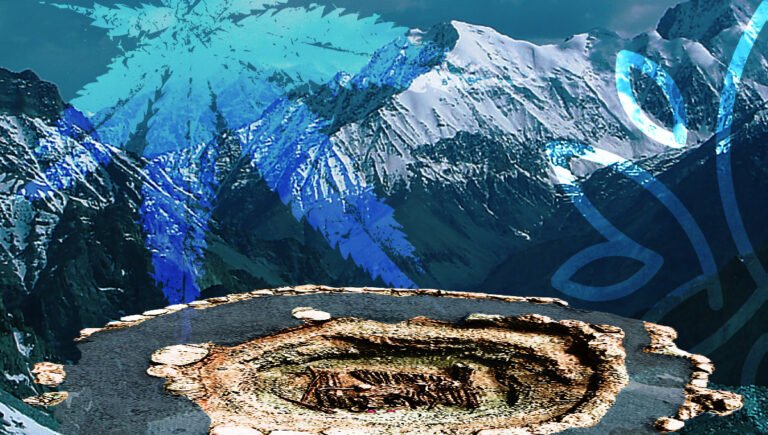
Prohibition does not only create crime.
It creates architecture.
It creates false rooms, altered walls, lifting floors, hidden tunnels, improvised wiring and water lines that tell a story before anyone speaks. When cultivation is forced outside legitimate systems, it does not disappear. It adapts.
Sometimes it adapts with astonishing technical imagination.
Sometimes that imagination becomes dangerous.
A hidden grow is not only a room with plants.
It is a room designed to deceive.
That is why the most revealing stories are not always about cannabis itself. They are about the spaces built around it.
In Worcestershire, England, police found cannabis cultivation inside the Drakelow Tunnels, a Second World War complex later adapted as a Cold War bunker. Reports described hundreds of plants inside a site once intended for national survival. The irony is strong, but the lesson is structural.
Under prohibition, the hidden room becomes part of the crop.
In Chilliwack, British Columbia, police discovered an underground bunker beneath a Quonset hut in 2009. A concealed hydraulic lift led to four grow rooms containing 11,520 plants. Police also reported security systems, booby traps and environmental damage linked to the irrigation system. Above ground stood a rural outbuilding; below it, an engineered cultivation site.
The story is spectacular. That is also the danger.
Spectacle can make illegal engineering look like genius. A better reading is less romantic: the bunker was a symptom of a plant, a market and a legal system pushed into concealment together. Knowledge does not vanish under prohibition. It becomes private, improvised, risky and harder to inspect.
Sometimes the building gives the secret away.
In Perris, California, a neighbour noticed water coming from a home. Deputies later found an illegal indoor grow with more than 2,000 plants. The discovery began not with botanical expertise but with infrastructure failure: water where it should not be. A hidden cultivation room still has to drink, breathe, heat, cool and power itself.
The plant may be hidden, but its systems are harder to conceal. Electricity behaves. Water moves. Heat escapes. Smell travels. Fire risk accumulates. A building under stress speaks through damp walls, overloaded circuits, condensation, strange ventilation and altered rooms.
In Rotherham, England, police found a cultivation site spread across several rooms and floors, linked by holes cut through walls. The result was described as labyrinth-like. The detail matters: this was not simply plants inside a building, but a building forced into the logic of concealed agricultural infrastructure.
Prohibition changes the floor plan.
It also changes the ethics of the room. In the Drakelow case, the court heard that men worked inside the bunker in harsh conditions, with limited daylight and serious fire risk from diverted electricity. Hidden cultivation can also hide labour, danger and coercion.
The same is true environmentally. Illegal cultivation has been linked to water diversion, chemical dumping and damage to sensitive watersheds. Research from Berkeley documented ecological harm in vulnerable California landscapes. The problem was not the plant alone, but the unregulated system around it.
This is where the easy story fails.
It is tempting to laugh at the bunker, the lift, the leaking house and the broken walls. The absurdity and ingenuity are real. But the conclusion should not be admiration. It should be literacy.
Prohibition does not stop cultivation.
It changes its architecture.
It can push cultivation into sealed rooms, unsafe electrics, improvised plumbing, false walls and remote land. It rewards secrecy over safety, silence over training and concealment over accountability.
That does not make every grower a villain. It does not make every underground technique meaningless. Many cultivation skills were preserved and refined when legal knowledge had no proper home. But it does mean that hidden knowledge carries hidden costs. When practice cannot be inspected, measured, regulated, corrected or openly taught, mistakes become harder to see. So do harms.
The plant deserves better than a bunker.
It deserves education, measurement, safe infrastructure, environmental responsibility and public knowledge. These sites show not merely that humans are clever under pressure, but that law shapes behaviour. When ordinary agricultural practice becomes legally impossible, extraordinary rooms appear around it.
A false wall is not only a hiding place.
It is policy made visible.
Factual Note
Hidden cannabis cultivation sites have been documented in bunkers, homes, industrial buildings and remote landscapes. Individual cases should be described through reliable police, court, journalistic or research sources, and reported plant counts should remain attributed rather than treated as independently verified facts.
Illegal indoor cultivation may involve fire hazards, diverted electricity, unsafe structural alterations, water damage, poor working conditions and environmental harm. These risks arise from the concealed and unregulated system around cultivation, not from the plant alone.
Prohibition does not automatically cause every unsafe grow, but it can create incentives for concealment, improvised infrastructure and avoidance of inspection.
Join early.
Keep the archive open.
The VADEMECUM is becoming a living archive of guides, tools, notes and practical plant knowledge.
Free member access. Join early. Keep the archive open.
Join early.
Keep the
archive open.
The VADEMECUM is not just a book anymore. It is becoming a living archive of guides, tools, notes and practical plant knowledge.
Free member access. Join early. Keep the archive open.
The VADEMECUM is becoming a living archive of practical plant knowledge.
Free member access.