
—orig. developed through MOICANNA
– originally developed through MOICANNA
HEBRARIUM
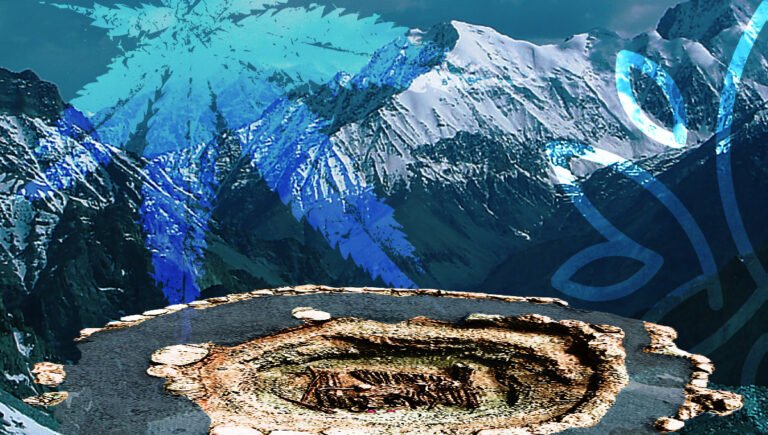
The body is not a machine
carrying a ghost.
That old separation has done enough damage.
Long before modern neuroscience, Plato’s Charmides placed a dangerous sentence in Socrates’ mouth:
“The error of physicians was to separate
the soul from the body”.
The language is ancient. The problem is not. We rename the soul as mind, mood, stress, trauma, memory, fear, desire or nervous system—and still pretend these things live somewhere else.
They do not.
The body does not end at the skin.
This is not poetry against science.
It is where science finally caught up
with common suffering.
Modern medicine is powerful, but it can become narrow when it cuts the human being into departments and forgets to put the person back together. The cardiologist sees the heart. The gastroenterologist sees the gut. The psychiatrist sees mood. The neurologist sees signal. The patient sees Tuesday morning, bad sleep, old fear, unpaid bills, shame, appetite, loneliness, work, inflammation, desire and a body that no longer believes in clean categories.
A person is not a filing cabinet.
This matters deeply for cannabis.
Because cannabis enters the whole person, not an isolated symptom. It does not enter “pain” in general. It enters this pain, in this body, after this life. It does not enter “anxiety” in general. It enters a nervous system with a history. It does not enter “sleep” in general. It enters a night full of light, noise, digestion, grief, hormones, debt, habit and memory.
So when we ask whether pleasure is medicine,
the honest answer is not simple.
Sometimes pleasure is medicine.
Joy is not a side effect of health. Sometimes it is one of its tools.
But pleasure can also become anaesthesia. It can teach a person not to heal, but to endure damage more quietly. It can become a private heaven built inside a public hell. It can help someone survive a jungle while quietly adapting him to the jungle.
That is the hard question:
Are you finding happiness, or learning
to tolerate unhappiness?
There is no universal answer. That is why the question matters.
The issue is not false paradise versus true sobriety. Life is not that clean. Sometimes a “false paradise” is the only shelter a person has found. Sometimes shelter is necessary. But shelter is not the same as home.
A serious cannabis culture
should be brave enough to say both things.
The point is not to criminalise pleasure. That is old moral stupidity. The point is to read pleasure carefully.
This is where cannabis education must leave childish categories behind. Recreational, medical, spiritual, addictive, therapeutic and escapist may help administration, but they do not fully describe lived experience. The same act can contain medicine, pleasure, avoidance, ritual, grief and rebellion in the same breath.
A person lights the plant.
But the whole life inhales.
We live in a jungle, yes. The beasts changed shape. They wear deadlines, rent, loneliness, screens, shame, noise, light, debt, trauma, status anxiety and bodies trained to survive by staying tense. In such a world, relief is not trivial.
But neither is clarity.
Cannabis should not be sold as paradise.
It should not be dismissed as escape.
It should be studied as a meeting point between chemistry and condition.
The serious question is not whether cannabis makes life feel better.
The serious question is what kind of better
it makes possible.
Cannabis does not act on a symptom in isolation.
It meets a body, a history, a nervous system and a life already in motion. Relief may be real, but so may avoidance, sedation or loss of clarity.
The serious question is not whether cannabis makes life feel better.
It is what kind of better it makes possible.
Factual Note
Pain, stress, memory, mood, sleep and bodily regulation are shaped by interacting neurological, psychological and social processes. Modern pain science increasingly recognises that symptoms are influenced by the whole person rather than by isolated tissues alone.
Cannabis may affect pain, anxiety, sleep, appetite, mood and perception, but responses vary widely by person, dose, product, timing, health status and context. Relief does not automatically mean recovery, and subjective benefit does not remove the need to consider impairment, dependence, interactions or underlying causes.
Join early.
Keep the archive open.
The VADEMECUM is becoming a living archive of guides, tools, notes and practical plant knowledge.
Free member access. Join early. Keep the archive open.
Join early.
Keep the
archive open.
The VADEMECUM is not just a book anymore. It is becoming a living archive of guides, tools, notes and practical plant knowledge.
Free member access. Join early. Keep the archive open.
The VADEMECUM is becoming a living archive of practical plant knowledge.
Free member access.