HEBRARIUM

z-Study before you spend

Jirzankal — The Smoke at the Edge of the World

Why the wrong product costs more than its price

The wrong product rarely costs
only what you paid for it.


  • It costs time.
  • It costs a cycle.
  • It costs plants.
  • It costs electricity.
  • It costs water.
  • It costs nutrients.
  • It costs calm.
  • It costs trust in your own judgement.

And if you are lucky, you may eventually
discover that the product was the cause.

If you are unlucky, you will blame everything else first.

  • The strain.
  • The weather.
  • The feed chart.
  • The pH.
  • The medium.
  • The moon.
  • The grower next door.
  • The plant itself.

That is why serious cultivation begins before the purchase.
Study before you spend.

Cheap is not the problem. Unstudied is the problem.

This is not an argument
for buying the most expensive thing.


  • Expensive can be stupid.
  • Premium can be packaging.
  • A famous brand can still be wrong for your system.
  • A sponsor can still exaggerate.
  • A boutique product can still be unnecessary.
  • A cheap tool can sometimes do the job perfectly.

The problem is not cheap.
The problem is unstudied.

A grower who knows exactly why a simple tool is enough is not cheap. He is disciplined.

A grower who refuses to pay for the one thing that protects the whole crop is not disciplined. He is gambling.

There is a difference between economy and stinginess.
Economy understands value. Stinginess only sees price.

The stingy grower’s trap

Every cultivation scene
has this character.


  • He buys expensive genetics, but refuses to buy calibration fluid.
  • He buys strong lights, but uses a weak extractor.
  • He spends on nutrients, but not on a decent pH meter.
  • He builds a room, but not proper drainage.
  • He buys a dehumidifier too small for late flower.
  • He imports clones, but refuses quarantine.
  • He buys bottles, but not test kits.
  • He saves on gloves, glasses, filters, meters, sanitation and airflow.

Then the crop fails. And he says:

  • “Bad genetics.”
  • “Bad luck.”
  • “This strain is difficult.”
  • “The company lied.”
  • “The weather changed.”
  • “The plant is sensitive.”

Maybe.
Or maybe the grow was built on false savings.

Stinginess in cultivation often hides as cleverness. It says, “I know a cheaper way.” Sometimes it does. Often it simply moves the cost into the future, where it becomes harder to see and more expensive to repair.

The stingy grower does not avoid cost.
He delays it until it becomes damage.

The “deus ex machina” problem

Do not wait for a machine-god
to descend from the stage and save the crop.


  • No miracle product will fix bad planning.
  • No booster will replace root health.
  • No nutrient line will fix bad water.
  • No expensive light will fix poor airflow.
  • No famous genetics will fix the wrong climate.
  • No microbe bottle will fix dead management.
  • No controller will fix a grower who does not understand the system.
  • No sponsor will save a lazy decision.

Cultivation is not Greek tragedy.
The god does not appear at the end to untangle the plot.

The plot was written at the beginning — when you chose the wrong tool, skipped the boring research, trusted someone’s confidence, or saved money in the place that held the whole system together.

Do not wait for deus ex machina.
Build the machine properly.

What “study” means

Study does not mean
becoming an engineer before buying a fan.


It means asking better questions.

  • What problem does this solve?
  • Do I actually have that problem?
  • What happens if it fails?
  • What does it need to work properly?
  • What maintenance does it require?
  • Can it be calibrated?
  • Can it be cleaned?
  • Can it be repaired?
  • Can it be trusted?
  • Does it fit my water, climate, space, skill and goal?
  • Is the claim supported by data or only by confidence?
  • Am I buying a tool or buying hope?

That last question matters.
Cannabis markets sell hope very well.

  • Bigger yield.
  • More resin.
  • Better terpenes.
  • Faster roots.
  • Cleaner water.
  • Smarter lights.
  • Stronger plants.
  • Magic microbes.
  • Perfect genetics.

Some products are excellent. Some are unnecessary.
Some are good, but wrong for you.

A product is only valuable inside the system
where it belongs.

5. Where not to be stingy

  1. Do not be stingy with measurement.
    pH, EC, temperature, humidity, light and water quality are not luxuries. They are the language of the system.
  2. Do not be stingy with safety.
    Eye protection, gloves, ventilation, electrical safety, fire safety and solvent discipline are not optional theatre.
  3. Do not be stingy with airflow.
    A plant can survive imperfect nutrients longer than it can forgive stagnant, humid air in the wrong phase.
  4. Do not be stingy with water knowledge.
    Bad water makes good products behave badly.
  5. Do not be stingy with sanitation.
    A cheap glove can be changed. A contaminated mother room can haunt you.
  6. Do not be stingy with quarantine.
    A free clone can cost the whole room.
  7. Do not be stingy with drying and curing.
    A beautiful crop can be ruined after harvest by impatience and poor environment.
  8. Do not be stingy with records.
    A grow log is cheaper than repeating the same mistake.

6. Where cheap may be fine

Cheap can be fine when the risk is low,
the function is simple, and failure is visible.


  • A basic tray.
  • A simple scoop.
  • A label.
  • A bucket.
  • A timer for non-critical tasks.
  • A hand tool that can be inspected.
  • A low-risk accessory that does not control the crop.

But cheap is dangerous when the product
controls invisible variables or critical systems:/p>

pH, EC, light intensity, electrical load, humidity, temperature, pathogens, solvents, water treatment,  pest residues, air exchange.

The rule:

Save money where failure is obvious and harmless.
Spend properly where failure is hidden and expensive.

7. Sponsor-friendly, but not sponsor-owned

A serious sponsor
should like educated buyers.


Because educated buyers understand why reliability matters.

  • They ask better questions.
  • They maintain equipment.
  • They calibrate.
  • They value support.
  • They know that documentation matters.
  • They do not treat every product as magic.

The best sponsor does not need blind loyalty.
The best sponsor survives scrutiny.

A good product survives good questions.

That is the only sponsor principle worth keeping.
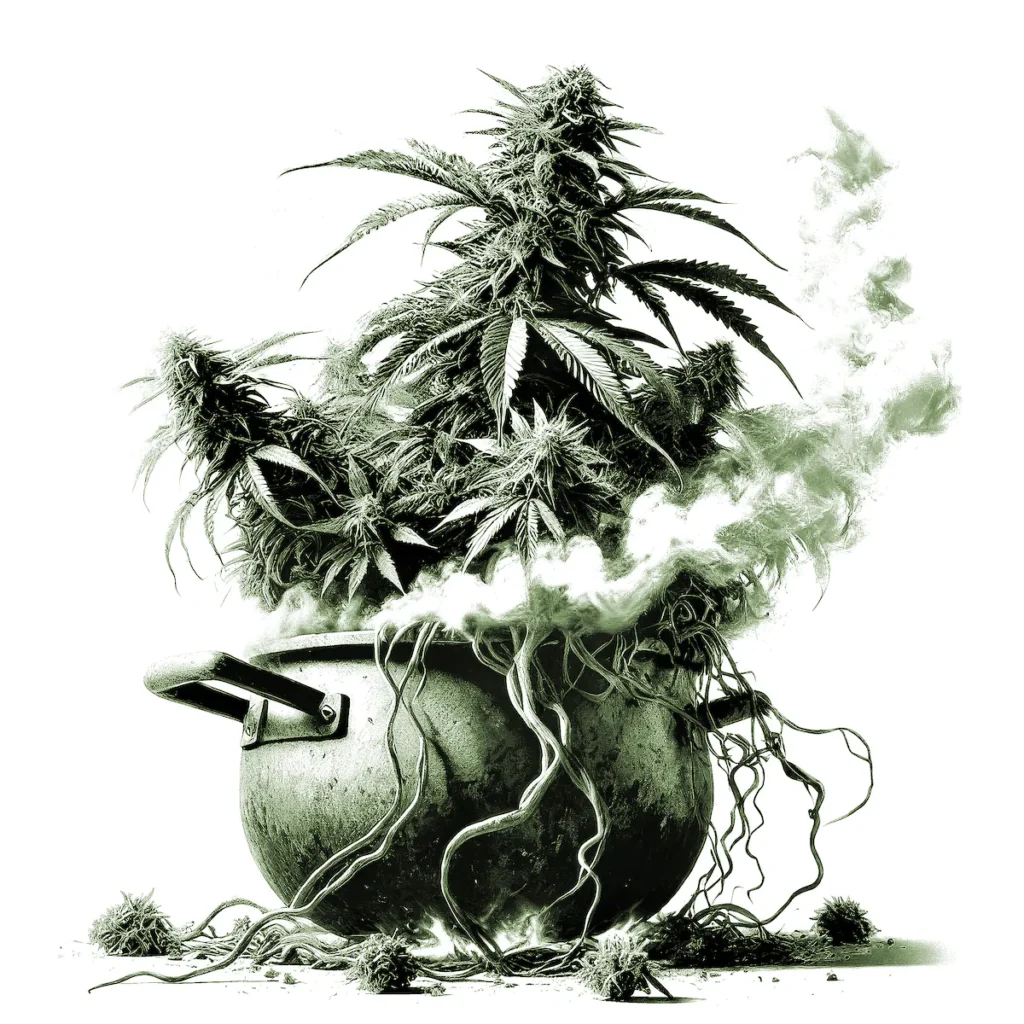
LIBERA HERBA Cannabis VADEMECUM — Early Access

Join early.

Keep the archive open.

The VADEMECUM is becoming a living archive of guides, tools, notes and practical plant knowledge.

Free member access. Join early. Keep the archive open.
LIBERA HERBA Cannabis VADEMECUM — Early Access

Join early.

Keep the
archive open.

The VADEMECUM is not just a book anymore. It is becoming a living archive of guides, tools, notes and practical plant knowledge.

Free member access. Join early. Keep the archive open.

The VADEMECUM is becoming a living archive of practical plant knowledge.

Free member access.