
—orig. developed through MOICANNA
– originally developed through MOICANNA
HEBRARIUM

Every grower makes mistakes.
That is not the problem.
The problem is when a mistake was already known, already described, already suffered by others, and still repeated because the grower was impatient, proud, careless or excited.
Experience is valuable.
Unnecessary damage is not.
This is not a moral lecture. It is a warning label.
Some mistakes teach.
Others risk the crop, the worker, the consumer, the building, the environment or someone else’s trust.
Those mistakes do not need to become your personal journey.
Just don’t.
Confirm that cultivation is permitted where you live before buying genetics, germinating seeds, bringing in clones or building a room.
Plant limits, location restrictions, possession, extraction, transfer and sales may be treated differently.
Enthusiasm is not permission.
A plant does not place the grower outside the law.
Water pH alone is not a water report.
Source-water EC, alkalinity, hardness, sodium, chloride and disinfectants may all influence irrigation, substrate chemistry, plumbing and nutrient management.
Test what is relevant to the system before buying filters, acids, supplements or reverse-osmosis equipment.
Water treatment without water knowledge
is expensive theatre.
Do not chase pH or EC readings from an uncalibrated, poorly stored or misunderstood meter.
Confirm the units. Check the temperature conditions. Know whether the meter reports EC directly or converts it into a ppm scale.
A reading is evidence, not an order.
A precise-looking number can still be wrong.
Overwatering is not simply “too much water at once”. It is a root zone remaining too wet for too long for the substrate, container, plant and environmental conditions.
Roots require both water and oxygen. In ordinary container media, prolonged saturation can reduce root-zone oxygen even when the leaves appear wilted.
Judge moisture with a method appropriate to the system: container weight, substrate feel, moisture measurements, irrigation history or controlled dryback data.
Do not water because the calendar says so.
Irrigate because the root zone requires it.
More fertiliser does not automatically produce more plant.
Nutrient concentration must fit the cultivar, crop stage, root-zone conditions, light environment, irrigation strategy and existing source water.
Burnt tips are not evidence of commitment.
High EC is not professionalism.
Feed the crop that exists,
not the harvest imagined in advance.
A damaged leaf is not a pesticide recommendation.
Inspect the plant. Look beneath leaves, inside the canopy and around the root zone. Determine whether the problem is an insect, a pathogen, environmental stress, old damage or something else.
One insect is a reason to inspect.
It is not automatic permission to spray.
When a treatment is justified, use only a product authorised for the crop, site, pest and growth stage in the relevant jurisdiction. Follow the label for rate, timing, protective equipment, re-entry and harvest restrictions.
Late flowering leaves fewer responsible treatment options.
Prevention and early identification matter.
Clones, mother plants, ornamentals, companion plants, tools, bags and reused containers can carry pests, eggs, spores or plant pathogens.
Separate new plant material from the established crop. Inspect it repeatedly and use an appropriate testing or quarantine protocol before introduction.
A free clone can become
the most expensive plant in the room.
Do not enter flowering with unresolved pests, unstable humidity, poor canopy access, blocked drainage, salt-loaded media or an air system that has not been tested under full plant load.
As flowers develop, canopies become denser and many corrective options become more difficult, disruptive or residue-sensitive.
Flowering does not erase vegetative mistakes.
It reduces the margin available to correct them.
Air is not empty space.
It moves heat and water vapour. It influences transpiration and the microclimate around leaves and flowers. It can also carry spores and aerosols.
A room-average humidity reading does not describe every pocket inside a dense canopy. Fans do not automatically solve inadequate extraction, dehumidification or overcrowding.
Manage the conditions experienced by the plant,
not only the number displayed on the wall.
“Organic”, “biological”, “plant-based” and “minimum risk” do not mean harmless, residue-free or appropriate for every crop stage.
Oils, soaps, microbial products, compost preparations and botanical pesticides can be useful. They can also be contaminated, incompatible, phytotoxic, over-applied or unsuitable for flowers intended for consumption.
A natural origin does not cancel concentration, exposure, timing or label requirements.
Do not replace chemical mythology
with natural mythology.
Runoff is water carrying whatever the system has added or removed: nutrients, salts, acids, bases, suspended material and possible biological contamination.
Recovered water is not automatically irrigation water.
Runoff, reverse-osmosis concentrate, condensate and collected rainwater have different source histories and should not be treated as interchangeable. Characterise the water, assign an appropriate use and dispose of it responsibly when reuse is unsuitable.
Waste does not stop existing
when it leaves the tray.
If the grower changes irrigation, nutrient concentration, lighting, environment, supplements and pest treatment at once, the plant may improve or deteriorate without teaching anything.
When no immediate hazard exists,
make the smallest defensible correction and record it.
Emergencies are different. Dangerous heat, electrical failure, leaks, severe wilting or a confirmed rapidly spreading outbreak may require several immediate actions.
Stabilise first.
Then document what happened.
Material intended for inhalation, ingestion or extraction demands a higher standard than material judged only by appearance.
Post-harvest handling can preserve a clean crop.
It cannot reliably make an unsafe crop
trustworthy.
A sophisticated system is not necessarily a resilient one.
Plan for heat, power loss, irrigation failure, blocked drainage, sensor error, equipment maintenance, cleaning and ordinary human delay.
Know which failures require alarms, backups or manual intervention. Keep electrical loads, water and heat sources within safe limits.
Complexity is not resilience.
Resilience is the ability
to fail without becoming a catastrophe.
Prohibition trained growers to hide, improvise, avoid records and distrust formal testing.
That history is understandable. It is not a technical standard.
Serious cultivation replaces secrecy
with records, verification and accountable decisions.
The grow is not floating in space.
It uses water, energy, nutrients, substrates, plastic and labour. Its waste and runoff go somewhere. Its heat, light, noise and odour may affect other people.
A mature grower does not ask only what the plant can take.
They ask what the room, the site, the worker
and the surrounding environment can afford.
But:
The plant does not need perfect people.
It needs growers
willing to prevent avoidable harm.
Factual Note
Cultivation guidance must be adapted to the crop, system, scale, intended use and applicable law. A practice that is suitable for an ornamental plant, field crop or food crop is not automatically appropriate for consumable cannabis.
Irrigation decisions should account for substrate structure, root-zone oxygen, crop demand and system design. Water pH alone is insufficient for assessing irrigation quality; alkalinity, salinity and specific dissolved constituents may also matter.
Pesticides and biological controls should be used only after the problem has been identified and only where their use is authorised. Product labels, protective-equipment requirements, re-entry intervals and harvest restrictions must be followed.
“Natural” and “organic” describe origin or production standards, not the absence of hazard. Worker protection, contamination control and product safety remain necessary in every cultivation system.
Immediate hazards—such as electrical faults, fire risk, leaks, dangerous temperatures or severe worker exposure—take priority over the one-change diagnostic rule.
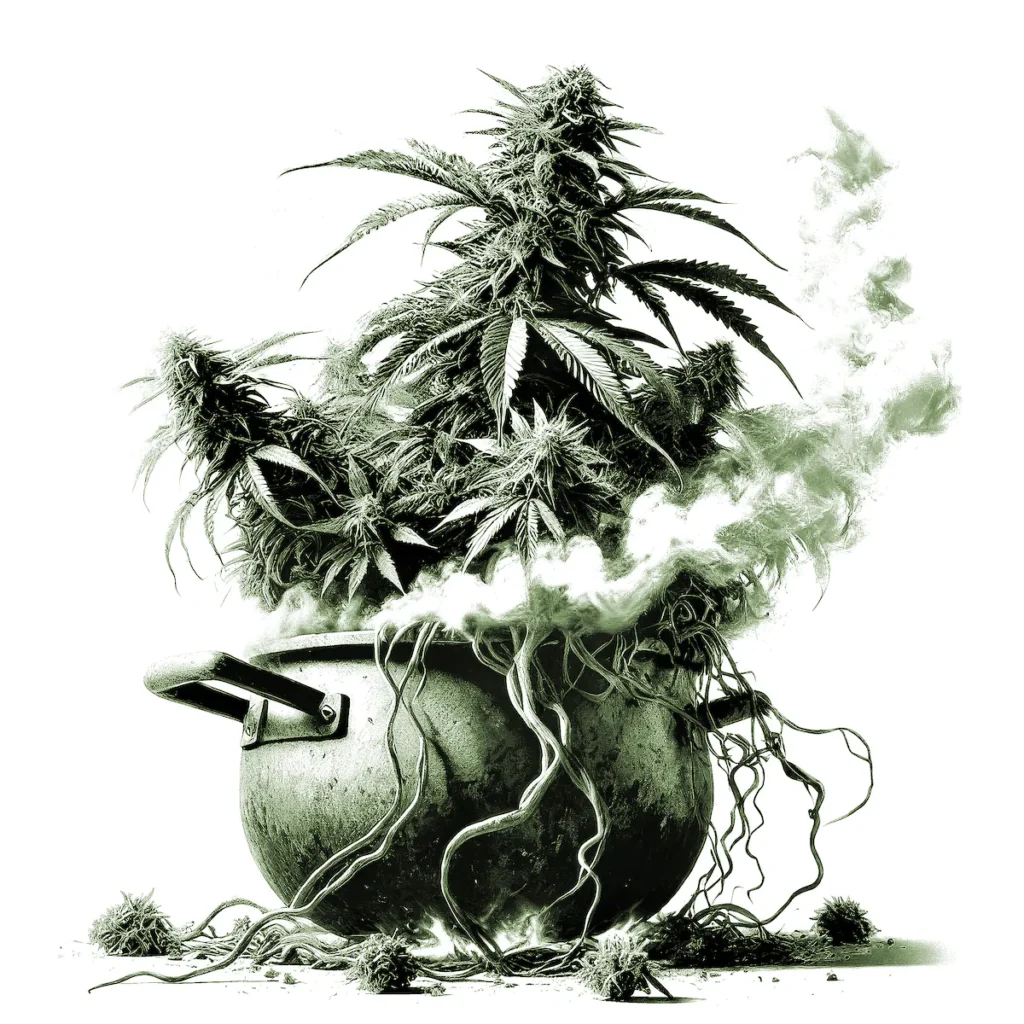
Join early.
Keep the archive open.
The VADEMECUM is becoming a living archive of guides, tools, notes and practical plant knowledge.
Free member access. Join early. Keep the archive open.
Join early.
Keep the
archive open.
The VADEMECUM is not just a book anymore. It is becoming a living archive of guides, tools, notes and practical plant knowledge.
Free member access. Join early. Keep the archive open.
The VADEMECUM is becoming a living archive of practical plant knowledge.
Free member access.