
—orig. developed through MOICANNA
– originally developed through MOICANNA
HEBRARIUM

A plant does not police
itself.
People, courts, newspapers, border agents, politicians, landlords, employers, prisons and police departments do.
This is why cannabis history cannot be told only as the history of a plant. It must also be told as the history of the people placed around the plant — and the people placed under suspicion because of it.
Cannabis did not fall equally on society.
The law did not touch every hand with the same force.
Some could write about the plant, study it, grow it under licence or sell it once the market changed.
Others were searched, arrested, deported, imprisoned, evicted, excluded or marked for life.
That difference is the story.
In the United States, the early twentieth-century construction of “marihuana” as a public threat developed inside an existing system of racial hierarchy, migration anxiety, poverty, segregation, moral panic and policing.
The word mattered.
That foreignness was useful.
It helped separate the feared smoked drug from the familiar plant already present in medicine, fibre and agriculture. It helped turn a plant into a social warning: Mexican labourers, Black musicians, urban vice, jazz, sexuality, violence, poverty, disorder.
The plant was not only being described.
It was being assigned a neighbourhood.
A body.
A colour.
A class.
Harry Anslinger, the first commissioner of the Federal Bureau of Narcotics, became a central figure in the federal campaign against marihuana. He did not invent every fear or prejudice, but he organised and amplified them through federal enforcement and propaganda.
This matters because prohibition is never only about the prohibited object.
It is about the imagined person holding it.
A bottle of alcohol in one hand can be civilisation.
In another, degeneracy.
A cannabis cigarette in one hand can be bohemian curiosity.
In another, criminal evidence.
The object does not change.
The social reading changes.
This is where race and class enter cannabis history with force.
Anti-cannabis campaigns did not merely say that the plant was dangerous. They helped teach the public who was dangerous. The “marijuana menace” was not a neutral scientific description. It was a story about disorder — and the people supposedly carrying it into respectable society.
Mexican migrants were framed as foreign contamination. Black musicians were tied to panic around jazz, nightlife and interracial contact. Poor and working-class users were treated as evidence of vice, while urban communities became laboratories for enforcement.
The plant became a pretext.
That does not mean every cannabis law had one single motive. It means the law moved through a society already trained to sort people unequally. This is the difference between a shallow and a serious reading.
The shallow reading says:
“Cannabis prohibition was racist.”
The serious reading asks:
The answer did not disappear with legalisation.
Modern reform created legal markets, medical programmes, licences, dispensaries and tax revenue. In many places, the same plant that once justified arrest now appears in wellness branding, venture capital and regulated storefronts.
But legalisation does not automatically repair the old map.
The ACLU’s 2020 report found that racial disparities in marijuana possession arrests persisted even in the era of reform. Arrest rates fell in legalisation states, but unequal enforcement did not simply vanish.
That is the bitter lesson.
For LIBERA HERBA, this is not a side issue. It is central.
Serious cannabis education cannot teach only chemistry, cultivation, medicine and fibre. It must also teach what was done in the name of the plant.
Not to produce guilt as decoration.
To produce memory as responsibility.
Because cannabis history is full of reversals.
The field becomes contraband.
The medicine becomes narcotic.
The user becomes criminal.
The prisoner becomes invisible.
Then, decades later, the product becomes legal, taxable and beautifully packaged. That final reversal is the one we must not let pass quietly. If the plant is now allowed to return, the people pushed out by its prohibition must not be erased from its memory.
Cannabis culture cannot call itself mature if it celebrates the plant and forgets the arrests.
It cannot praise freedom and ignore enforcement.
It cannot sell heritage while hiding the people who paid for that heritage with records, prison time, lost work, lost housing, lost custody, lost safety and lost years.
The plant deserves knowledge, not noise.
And knowledge includes this:
Cannabis was never only prohibited.
It was policed.
And policing always asks the same question before it acts:
Not only, “What is this?”
But, “Who has it?”
That is where the history burns.
Factual Note
Cannabis prohibition in the United States developed through overlapping forces, including state laws, federal bureaucracy, moral reform, migration anxiety, racialised fear, media sensationalism and policing.
The terms marihuana and marijuana were not invented by prohibitionists, but they became politically useful in campaigns that associated cannabis with Mexican migrants, Black communities, jazz culture, poverty and crime.
The ACLU’s 2020 report documented persistent racial disparities in marijuana-possession arrests, including after reform had begun in many states. Legalisation can reduce arrests without automatically eliminating unequal enforcement, criminal records or barriers to participation in the legal market.
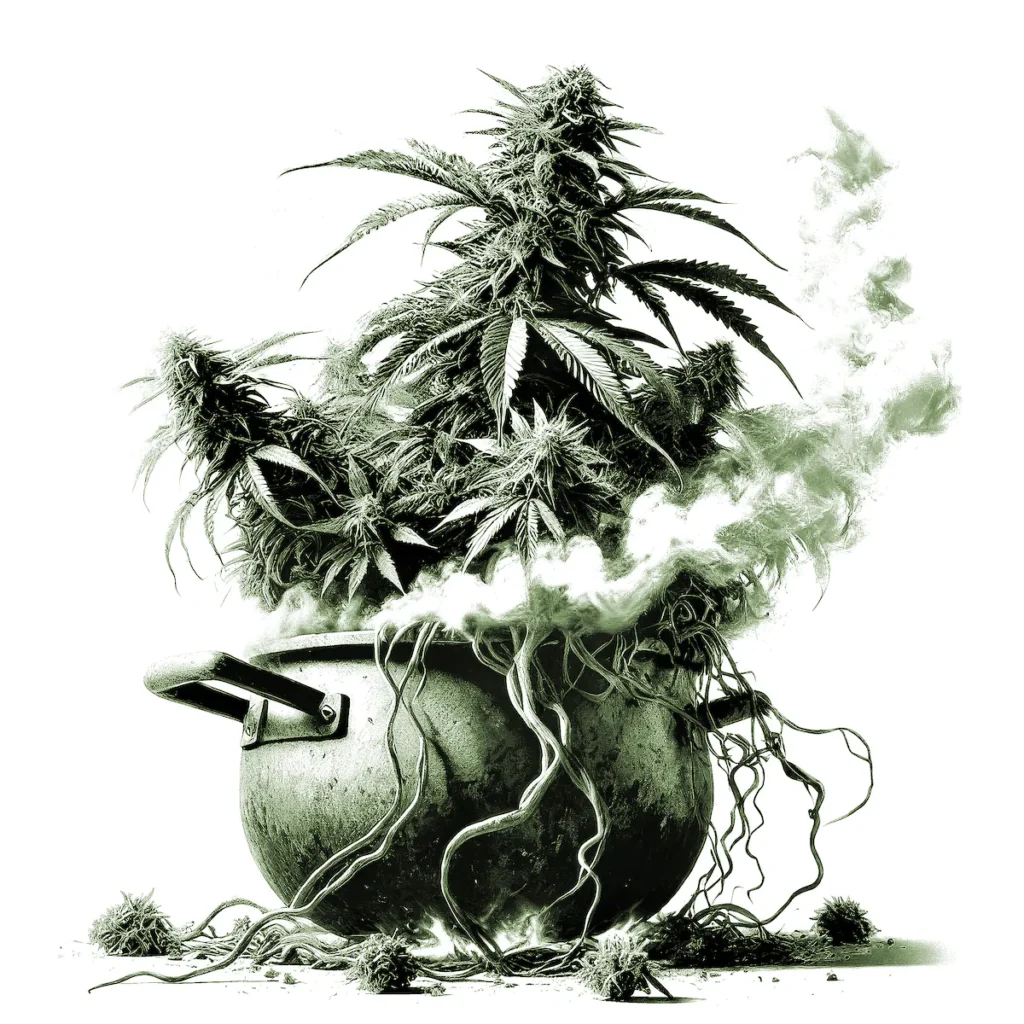
Join early.
Keep the archive open.
The VADEMECUM is becoming a living archive of guides, tools, notes and practical plant knowledge.
Free member access. Join early. Keep the archive open.
Join early.
Keep the
archive open.
The VADEMECUM is not just a book anymore. It is becoming a living archive of guides, tools, notes and practical plant knowledge.
Free member access. Join early. Keep the archive open.
The VADEMECUM is becoming a living archive of practical plant knowledge.
Free member access.