
—orig. developed through MOICANNA
– originally developed through MOICANNA
HEBRARIUM

We collect traces because
the truth is more useful than comfort.
Cannabis history is not only hidden. Sometimes it is badly remembered.
That may be the larger problem.
A plant with such a long human record should have left a clean archive. Laws, fields, songs, medicines, ropes, textiles, court cases, poems, posters, bottles, tax stamps, seed catalogues, police files, medical texts, grow manuals, museum objects.
The traces are everywhere.
And yet the record is broken.
Some of it was destroyed or censored.
Some of it was never collected.
Some survived in private hands or under names people stopped recognising.
Some became folklore, propaganda or meme.
This is why cannabis education must begin with caution.
Not coldness. Caution.
The plant has been used by too many storytellers for too long: reformers and prohibitionists, patients and police, doctors and mystics, activists, companies, artists and internet pages hungry for easy truth.
Each group preserved something. Each group also distorted something.
That is how false certainty grows.
A quote appears.
A “fact” travels.
A king supposedly ordered it; a president smoked it; a poet praised it.
An empire fell because of it. A law happened because of one villain.
A song becomes proof of an entire social world.
Sometimes there is truth inside the story.
Sometimes there is only smoke.
LIBERA HERBA exists for the space between those two.
The broken archive does not mean we give up.
It means we read better.
A serious cannabis archive needs layers: primary and secondary sources, museum labels, oral histories, scientific papers, legal texts, digitised objects, sound recordings, rights statements, context and doubt.
The Library of Congress advises students working with primary sources to place sources in historical context, identify point of view and compare them with other primary and secondary sources. That is not only a classroom method. It is exactly what cannabis history needs.
The archive speaks.
But it does not always tell the truth directly.
This is especially clear in music.
Early 78 rpm records are now being preserved and digitised by projects such as the Internet Archive’s Great 78 Project, which describes itself as a preservation, research and discovery project for 78 rpm records from roughly 1898 to the 1950s. These discs have research value not only as audio, but as objects: labels, surface noise, catalogue numbers, performance practice, migration traces, commercial routes and survival marks.
For Rebetiko, that matters deeply.
A hashish song is not just a song about hashish.
Private collections and virtual museums, such as the Kounadis Archive Virtual Museum, show how rich this material world can be: records, scores, interviews, photographs, postcards, sound devices and related ephemera gathered into a cultural memory space.
But preservation is not the same as free use.
This is another lesson LIBERA HERBA should teach.
Europeana’s guidance is useful because it uses standardised rights statements to clarify the copyright status of digital objects and the conditions under which they may be reused. Its Public Domain Charter argues that digitisation should not create new rights over material already in the public domain.
That is not a technical footnote.
It is ethics.
The goal is not to grab the archive. The goal is to point people towards it, credit it, read it and keep it alive without stealing the hands that preserved it.
Cannabis history needs this discipline more than most subjects because the plant attracts bad memory.
This is why the archive must be handled as a living field, not as a pile of ammunition.
We do not collect traces to prove that cannabis was always good.
We collect traces because the truth is more useful than comfort.
A mature cannabis culture must be able to hold all of that.
The broken archive is not a weakness.
It is the condition of the work.
For LIBERA HERBA, education is not the opposite of culture.
It is the only way culture survives
without becoming noise.
Factual Note
Cannabis history survives through uneven records: legal and medical texts, museum objects, oral traditions, songs, commercial material, police documents, scientific papers and private collections.
Primary sources are essential, but they require historical context, attention to point of view and comparison with other primary and secondary evidence. The Great 78 Project preserves and provides access to historic 78 rpm recordings, while the Kounadis Archive Virtual Museum brings together records, scores, interviews, photographs, postcards and sound-reproduction equipment.
Digitisation improves access but does not automatically make every digital object free to reuse. Europeana uses standardised rights statements to communicate copyright and reuse conditions, and its Public Domain Charter supports keeping public-domain material in the public domain after digitisation.
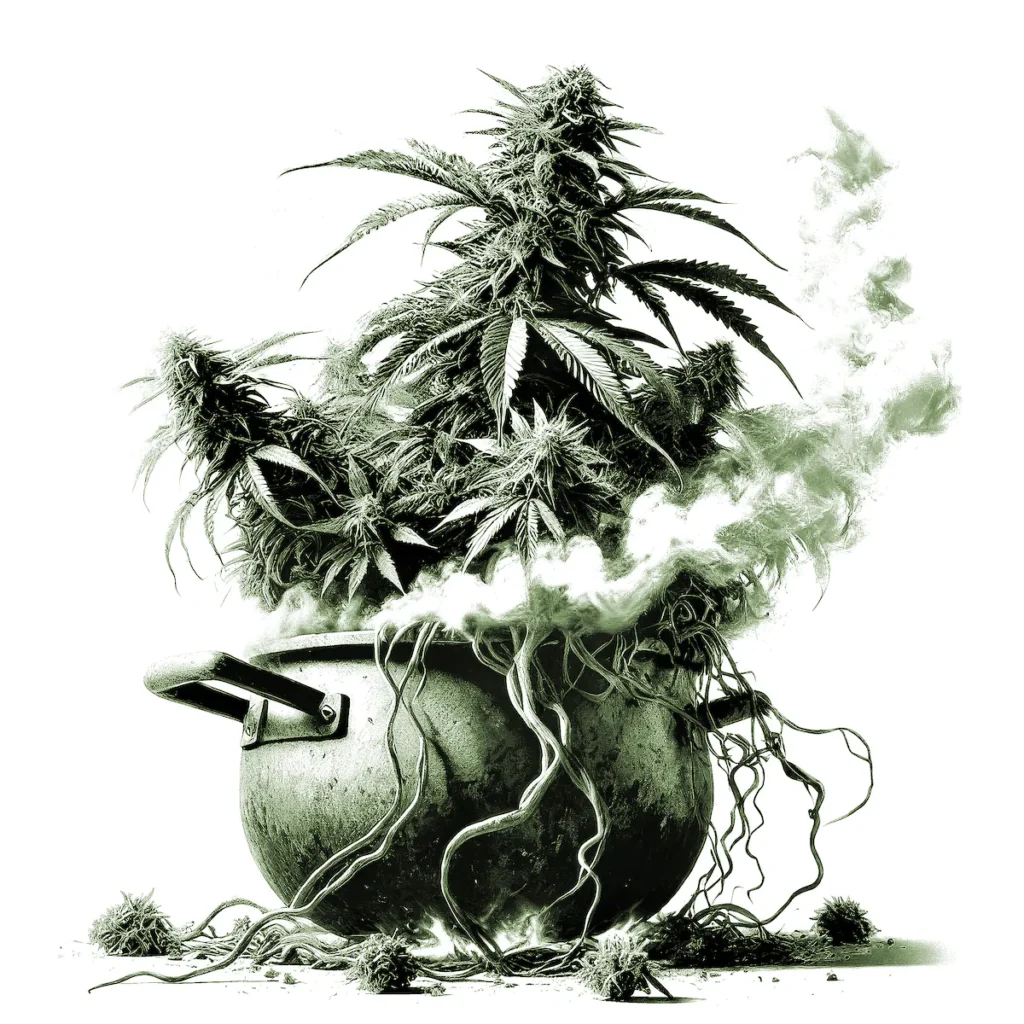
Join early.
Keep the archive open.
The VADEMECUM is becoming a living archive of guides, tools, notes and practical plant knowledge.
Free member access. Join early. Keep the archive open.
Join early.
Keep the
archive open.
The VADEMECUM is not just a book anymore. It is becoming a living archive of guides, tools, notes and practical plant knowledge.
Free member access. Join early. Keep the archive open.
The VADEMECUM is becoming a living archive of practical plant knowledge.
Free member access.