
HERBARIUM
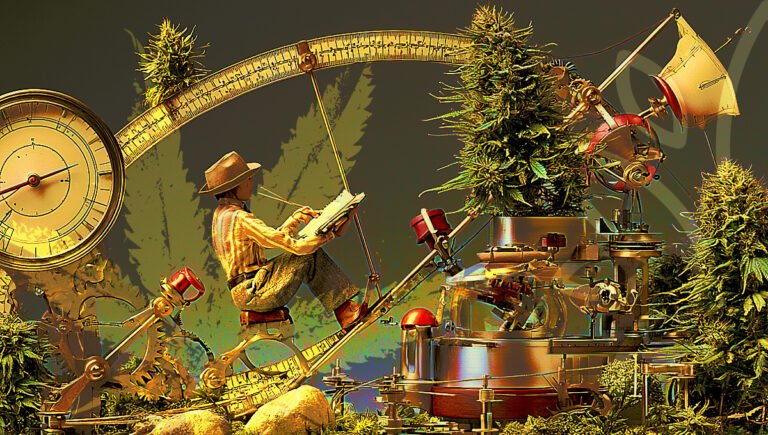
Theory is clean.
Practice is wet, hot, late, uncertain and usually happening while the plant is already reacting.
That is why many growers “know” things they cannot use.
Then the plant droops.
And the knowledge disappears.
A grower may understand a concept and still fail to apply it.
That is normal.
Theory lives in categories.
Practice lives in timing.
The plant does not ask whether the grower knows the definition of overwatering. It asks whether root-zone moisture and oxygen are being judged correctly before the next irrigation.
It does not ask whether the grower has heard the phrase “pH lockout”. It asks whether water, nutrient solution, substrate and root condition have been checked before a deficiency is declared.
It does not ask whether the grower can define VPD. It responds to the actual temperature, humidity, airflow and light conditions around its leaves.
Theory lives in categories.
Practice lives in timing and context.
Knowledge becomes useful only when it passes through the chain:
Observation
What has changed?
Measurement
What can be checked reliably?
Context
When did it begin, and what happened beforehand?
Interpretation
Which explanations fit the whole pattern?
Decision
Does the situation require action, monitoring or more evidence?
Action
What is the smallest effective correction?
Record
What was changed, when and by how much?
Review
Did the condition improve, stabilise or continue spreading?
Most growers do not fail because they lack opinions.
They fail because they skip the chain.
Panic
makes bad decisions.
The first rule of practice:
Slow down the decision. Not the observation.
Observe quickly. Decide slowly.
When the grower changes five things at once,
the result becomes difficult to interpret.
They lower the light, change the nutrient solution, add a supplement, alter irrigation, remove foliage and apply a treatment.
Then the plant improves.
Or worsens.
But which action mattered?
When conditions are stable and there is no immediate hazard, change one major variable at a time where practical. Record the change and allow enough time for a meaningful response.
This is not an absolute rule. Equipment failure, dangerous heat, water leaks, severe wilting or the containment of an identified pest or disease may require several immediate actions. In those cases, stabilise the system first and document everything afterwards.
The grow room is not only a place to act.
It is a place to learn from the action.
A grow diary is not nostalgia.
It is memory with dates.
Record what may later explain plant response:
Record the date, crop stage and any important change.
A number without context is difficult to use.
A grower who does not record
is condemned to repeat feelings.
Data logging is a grow diary
that does not forget.
Beginners want heroic answers.
Good growers use boring process.
A drooping or discoloured plant does not arrive with its diagnosis attached.
Begin by asking whether a real problem exists. Compare the plant with healthy plants of the same cultivar and developmental stage.
Then establish the pattern:
Inspect before interpreting.
Check root-zone moisture and condition, the growing environment, recent inputs and visible signs of insects or pathogens. Measure only with tools appropriate to the system and readings that can be trusted.
Symptoms are clues, not verdicts.
A diagnosis without sequence
is theatre.
The real goal is not to remember
everything.
The real goal is to build habits that prevent stupidity.
Good practice is theory turned
into routine.
Not every observation needs action.
This is hard.
The serious grower learns the difference between:
The serious grower learns the difference.
The amateur reacts to everything.
The professional notices more and changes less.
Ask for help before the disaster is complete.
But ask properly.
An incomplete request: “What is wrong?”
A useful diagnostic request includes:
Include what has already been changed. Otherwise the person helping may diagnose the correction rather than the original problem.
Good context makes useful help more likely.
Missing context invites confident guessing.
Theory is not the opposite
of practice.
Theory is practice before the plant tests you.
The grower’s job is to build a bridge between the two.
That is how
knowledge becomes cultivation.
Factual Note
Visual plant symptoms are rarely unique to one cause. Wilting, chlorosis, necrosis and slow growth may result from environmental stress, root-zone conditions, nutrition, pests, pathogens or interacting problems.
A systematic diagnosis asks whether the condition is genuinely abnormal, how many plants are affected, where symptoms occur, when they appeared, whether they are progressing and whether physical signs of insects or disease are present.
Measurements such as pH, EC, temperature and humidity provide evidence only when the instruments are suitable, maintained and correctly positioned. One reading does not diagnose a plant without information about the crop, substrate, water, environment and recent management.
Changing one major variable at a time can make cause and effect easier to interpret, but it is not an emergency rule. Immediate hazards and clear system failures should be stabilised without delay, with all interventions recorded.
Grow logs do not eliminate uncertainty. They preserve timelines and allow later comparisons between inputs, environmental conditions, interventions and plant response.
A living archive of cannabis—its cultivation in practice and its traces across science, culture, language, power and memory.
Join early.
Keep the archive open.
The VADEMECUM is becoming a living archive of guides, tools, notes and practical plant knowledge.
Free member access. Join early. Keep the archive open.
Join early.
Keep the
archive open.
The VADEMECUM is not just a book anymore. It is becoming a living archive of guides, tools, notes and practical plant knowledge.
Free member access. Join early. Keep the archive open.
The VADEMECUM is becoming a living archive of practical plant knowledge.
Free member access.