
HERBARIUM

Africa does not need
another miracle crop sold from
a hotel conference room.
It has seen enough of that.
Gold. Diamonds. Cocoa. Coffee. Tobacco. Minerals. The resource changes; the structure often does not. Something is found, priced, licensed, exported and celebrated. The people closest to it are promised development and may instead receive policing, low wages, displacement, dependency and paperwork.
Cannabis may become different.
It may also become painfully familiar.
That is the danger.
South Africa is often described
as an emerging cannabis market.
And that is true — but only if the sentence is handled carefully.
South Africa has recognised private adult use, possession and cultivation through the Cannabis for Private Purposes Act. That is a significant legal milestone, but it is not a full commercial adult-use market. The Act continues to prohibit dealing in cannabis.
So when people say “South Africa has opened”, the correct answer is:
Opened what?
A clear route for small traditional growers?
That remains the hard question.
Zimbabwe has allowed licensed cannabis production for medicinal and scientific purposes through guidelines issued by the Medicines Control Authority of Zimbabwe. That may represent progress, but a licence does not automatically reach farmers, patients or communities historically punished around the plant.
Lesotho became one of Africa’s early medical-cannabis licensing cases, but high licence costs and export-oriented models showed how international capital can enter faster than local farmers.
Morocco offers a different possibility because legal medicinal and industrial cannabis has been linked to long-standing farming regions and co-operatives. The question remains whether those co-operatives will gain real bargaining power or merely become the acceptable face of extraction.
The licence is not
the liberation.
Africa has often been asked
to provide raw value
while others capture the refined value.
In cannabis, the same structure could look like this:
But: foreign capital, genetics, compliance, extraction, branding, patents and retail margins.
And then someone calls it development.
That is not cannabis reform.
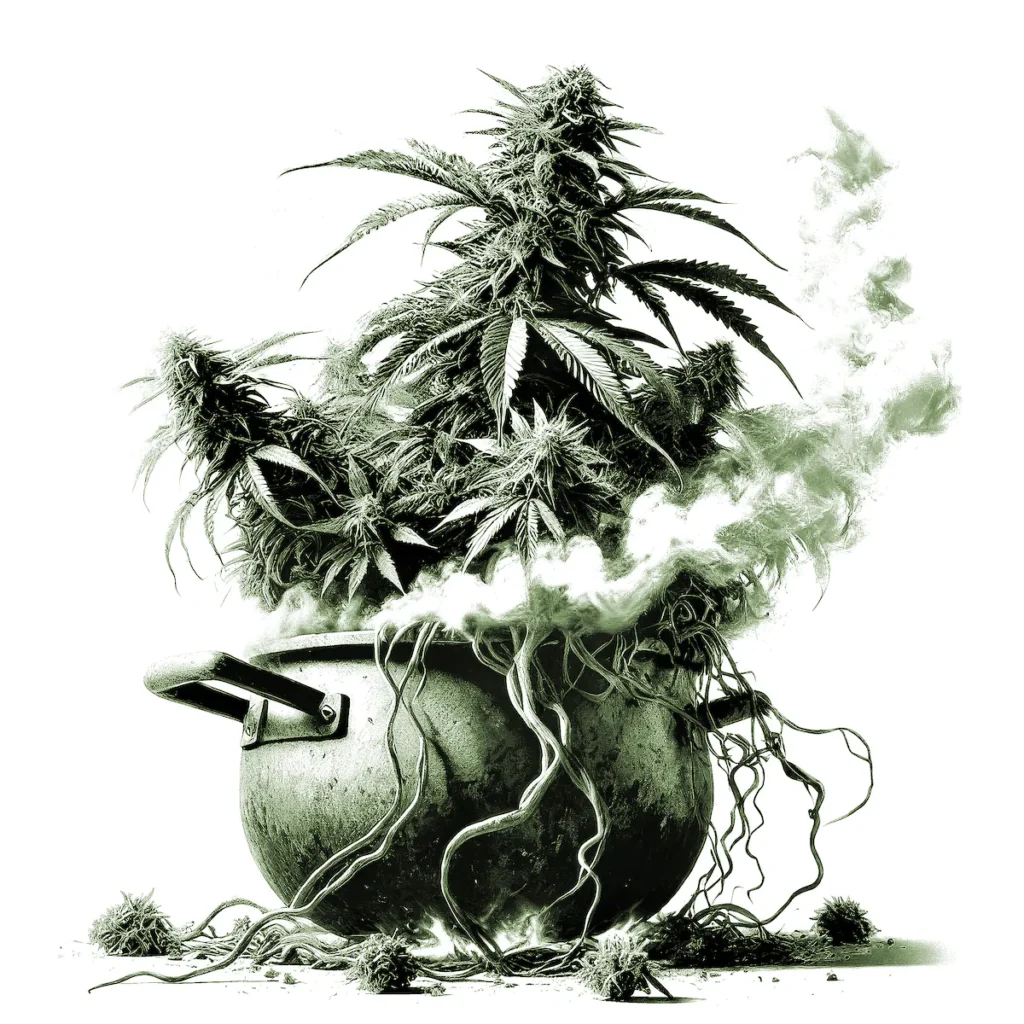
That is the mine with leaves.
We should not collapse into cynicism.
Cannabis could help.
Cannabis reform could create legal work, reduce arrests, bring farmers into regulated markets, support medical access and build local processing, laboratories, agronomy, training, co-operatives and regional brands.
But only if the system is designed for that.
A good African cannabis model would need:
Without these, “green gold” becomes an old story
with better packaging.
This is not a story about Africa
needing rescue.
That framing is poison.
The real question is sharper:
Can cannabis reform in Africa
avoid becoming another extractive industry?
And the answer is:
Only if legalisation is designed around people,
not only licences.
Factual Note
Cannabis reform differs widely across African countries. Private-use rights, medical licensing, industrial-hemp regulation, export production and commercial adult-use markets are distinct legal models and should not be described as equivalent.
High licensing costs, limited access to capital, export-oriented regulation and weak local processing can exclude small farmers even where cultivation becomes legal. Co-operatives and benefit-sharing mechanisms may improve access, but their effectiveness depends on implementation and bargaining power.
Specific legal claims concerning South Africa, Zimbabwe, Lesotho and Morocco should retain links to current official legislation, regulatory authorities and reliable research.
A living archive of cannabis—its cultivation in practice and its traces across science, culture, language, power and memory.
Join early.
Keep the archive open.
The VADEMECUM is becoming a living archive of guides, tools, notes and practical plant knowledge.
Free member access. Join early. Keep the archive open.
Join early.
Keep the
archive open.
The VADEMECUM is not just a book anymore. It is becoming a living archive of guides, tools, notes and practical plant knowledge.
Free member access. Join early. Keep the archive open.
The VADEMECUM is becoming a living archive of practical plant knowledge.
Free member access.